
In this article
- 1. Why Auckland is the gateway to New Zealand
- 2. The harbour and the waterfront
- 3. The islands of the Hauraki Gulf
- 4. The volcanoes and the parks
- 5. The west coast beaches and the rainforest
- 6. Where to stay
- 7. When to visit Auckland
- 8. Getting to Auckland
- 9. Getting around Auckland
- 10. Staying connected with an eSIM
- 11. Muslim-friendly travel in Auckland
- 12. Protecting your trip
Auckland is New Zealand's largest city, a place where the Pacific Ocean and the Tasman Sea almost meet across a narrow isthmus, where dormant volcanoes dot the urban landscape, and where the harbour is so full of boats that it is called the City of Sails. It is a city that is both cosmopolitan and deeply connected to nature — within an hour you can be on an island, in a rainforest, on a wild west-coast beach or in a vineyard. This guide covers what to see, where to stay, when to go, how to get around, how to stay connected and how to compare current offers from multiple travel brands before completing your booking with a partner.
Why Auckland is the gateway to New Zealand
Auckland is where most visitors arrive in New Zealand, and it is a worthy destination in its own right. The setting is extraordinary — a narrow isthmus between two harbours, with the Pacific Ocean to the east and the Tasman Sea to the west, and dozens of volcanic cones rising from the urban grid. The climate is mild and subtropical, the food scene draws from the Pacific, Asia and Europe, and the Maori and Pacific Island cultures give the city a distinctive identity. It is also the practical hub for exploring the North Island, from the Bay of Islands to the Coromandel to Rotorua.
The harbour and the waterfront
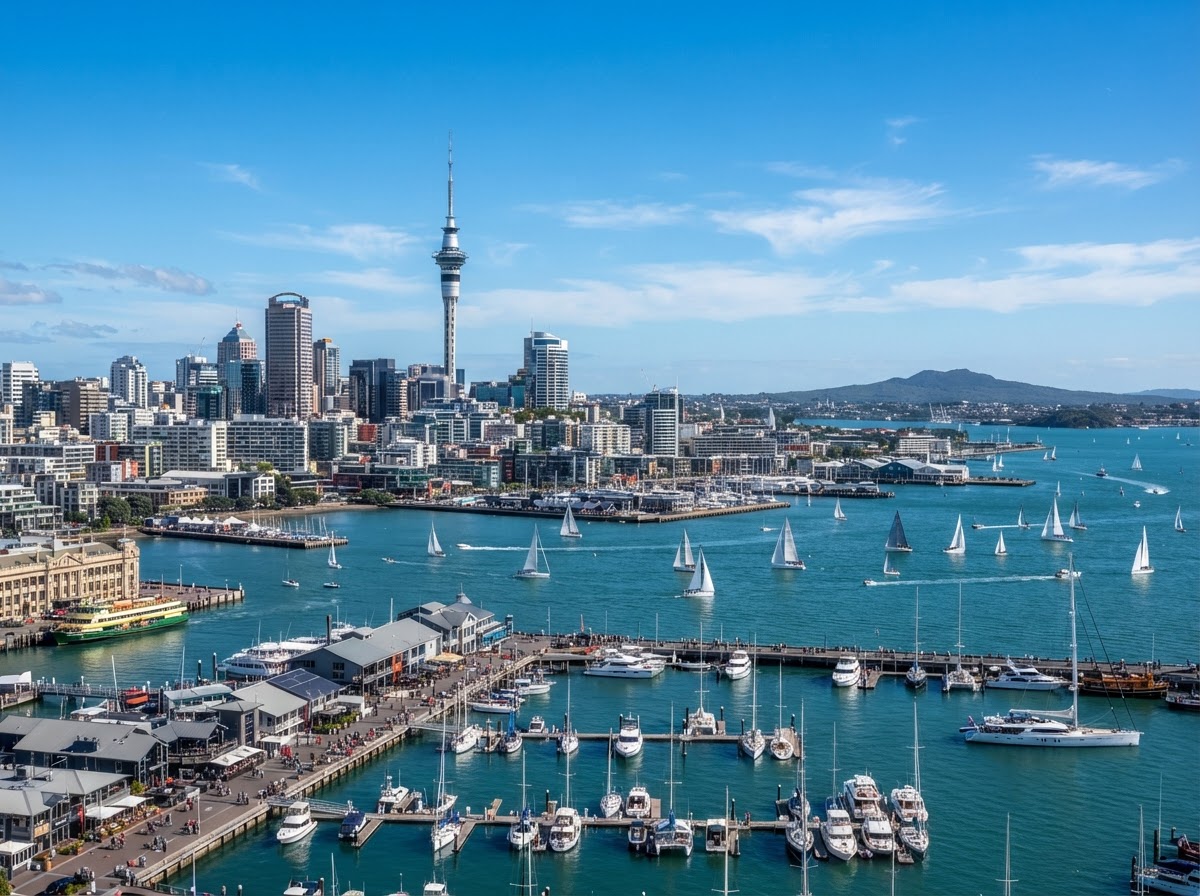
Auckland's harbour is its heart. The Viaduct Harbour and the Wynyard Quarter are the redeveloped waterfront areas with restaurants, bars and marinas. The ferry terminal is the departure point for the islands of the Hauraki Gulf. A harbour cruise or a ferry ride is the best way to see the city from the water. The Auckland Harbour Bridge connects the city to the North Shore. The Princes Wharf and Queens Wharf are the central waterfront areas. The harbour is why Auckland is called the City of Sails — it has the highest boat ownership per capita in the world.
The islands of the Hauraki Gulf
The Hauraki Gulf, the protected sea east of Auckland, has dozens of islands, many reachable by ferry. Waiheke Island, 40 minutes by ferry, is the most popular — a haven of vineyards, beaches, olive groves and art studios, perfect for a day trip or an overnight. Rangitoto Island, a dormant volcano that rises from the harbour, has a lava field and a summit walk. Tiritiri Matangi Island is a predator-free wildlife sanctuary with rare native birds. Great Barrier Island, further out, is a remote wilderness of beaches and forests. The islands are the best day trips from Auckland.
The volcanoes and the parks
Auckland is built on a volcanic field, and the dormant cones are the city's natural landmarks. Mount Eden (Maungawhau), the highest, has a 360-degree view of the city and the harbours from its crater rim. One Tree Hill (Maungakiekie) has a monument and a park. Mount Victoria and North Head, on the North Shore, have harbour views and historic forts. The Auckland Domain, the city's oldest park, has the Auckland Museum, which holds the world's largest collection of Maori taonga (treasures). The volcanoes are a reminder that the land here is alive, and the views from their summits are the best in the city.
The west coast beaches and the rainforest
The west coast of Auckland, on the Tasman Sea, is a dramatic contrast to the sheltered harbour. Piha Beach, with its black iron-sand and Lion Rock, is the most famous surf beach. Muriwai Beach has a gannet colony on the cliffs. The Waitakere Ranges, the rainforest behind the coast, have waterfalls (the Fairy Falls, the Kitekite Falls) and the Arataki Visitor Centre. The west coast is wild, beautiful and a short drive from the city — the black sand, the crashing surf and the dense forest are a different New Zealand from the polished harbour side.
Where to stay
The city centre (CBD) and the waterfront are the most central, near the ferries, the restaurants and the harbour. Parnell and Ponsonby are the stylish inner suburbs with good dining. Devonport, on the North Shore (reached by ferry), is a charming village with beaches and views. Waiheke Island is for a vineyard stay. Compare hotel options across booking platforms to find the right balance of location, price and style for your trip, and note that Auckland is spread out, so a location near the CBD or a ferry terminal is convenient.
When to visit Auckland
Auckland has a mild, subtropical climate. The best time is the New Zealand summer (December-February), when it is warm (20-25°C) and the beaches and islands are at their best. Spring (September-November) and autumn (March-May) are pleasant and less crowded. Winter (June-August) is mild and wet (12-15°C), the cheapest time and good for museums and indoor attractions. Auckland can rain at any time of year, so pack layers and a rain jacket. Whenever you go, the climate is comfortable and the scenery is green.
Getting to Auckland
Auckland Airport (AKL) is the main international airport, about 45 minutes from the city centre. Compare flights across providers — Auckland is the main gateway to New Zealand with direct flights across the Pacific, Asia and the Middle East. The SkyBus or a pre-booked private transfer connects the airport to the city; compare transfer providers for fixed-price options. Taxis and ride-hailing apps are available. Build in time for the journey from the airport, which can be 45 minutes in traffic.
Getting around Auckland
Auckland's public transport includes buses, trains and ferries, all covered by the AT HOP card (tap-and-go). The ferries are essential for the islands and the North Shore. The Link bus circles the inner city. The trains serve the wider suburbs. Ride-hailing apps and taxis are available. For the west coast, the wine regions and the wider North Island, compare car rental options — driving is on the left, on good roads, and a car gives you the freedom to explore. New Zealand is a country built for road trips.
Staying connected with an eSIM
New Zealand has good mobile data in the cities and along the main routes, though coverage in remote areas can be patchy. A travel eSIM is the easiest way to have data from the moment you land. Compare data-only eSIMs across providers, checking coverage if you plan to travel beyond Auckland, data allowances and validity. A single-country New Zealand plan is usually cheapest; a combined Australia-New Zealand plan is better value if you are visiting both. Download offline maps for the remote areas. Remember that most travel eSIMs are data-only, so keep your home line active for SMS verification codes.
Muslim-friendly travel in Auckland
Auckland has a growing Muslim community, and it is a reasonably Muslim-friendly city. Halal food is available, particularly in the suburbs of Mount Roskill, Sandringham and Otahuhu, where there are halal butchers and restaurants, and halal-finder apps are helpful. The Zayed bin Sultan Al Nahyan Mosque in Mount Roskill is the main mosque. Prayer facilities are available at the airport and in the main mosques. New Zealand is diverse, tolerant and welcoming, and Auckland is its most multicultural city. With a little research, Auckland is a comfortable destination for Muslim travellers.
Protecting your trip
Travel insurance is recommended for New Zealand — medical care is excellent but can be expensive for visitors. Compare policies and check what is included, particularly coverage for adventure activities like hiking and water sports. If your flight to or from Auckland is delayed, cancelled or overbooked, you may be entitled to compensation under applicable air passenger rights regulations; specialist services can check your eligibility and handle the claim with the airline on your behalf. Keep your boarding pass and booking reference until you are home.
Recommended Offers
Relevant offers for this trip. You'll be redirected to the partner to complete your booking.
Flights to Auckland
Check PriceTours & activities in Auckland
View DealsAttraction tickets in Auckland
View OfferExperiences & day tours in New Zealand
View DealsCity passes & multi-attraction tickets
View PassesSelf-guided audio walks in Auckland
View OfferAuckland airport private transfer
Check PriceAirport transfer with English-speaking driver
View AvailabilityCompare airport transfer prices
Check PriceShared & private airport transfers
View OfferNew Zealand eSIM data
View DealUnlimited New Zealand data eSIM
View DealFlexible global data eSIM
View DealPrepaid New Zealand data eSIM
View DealLuggage storage in Auckland
View DealCar rental comparison in New Zealand
Check PriceCar rental across New Zealand
Check PriceCar hire with price-drop protection
Check PriceCar hire with AutoEurope
Check PriceLocal car rental in New Zealand
Check PriceScooter & motorbike rental
Check PriceFlight delay compensation check
Check EligibilityFlight compensation claim service
Check EligibilitySome links may be affiliate links. JalanDeals may earn a commission when you book through selected partners.
Frequently Asked Questions
How many days do I need in Auckland?
Three to four days is a good first trip — enough for the harbour, a Waiheke Island day trip, a volcano and the west coast. A week lets you add the Bay of Islands or Rotorua.
When is the best time to visit Auckland?
December to February is the warm summer (peak season). Spring and autumn are pleasant and less crowded. Winter (June-August) is mild and wet but the cheapest time.
How do I get from Auckland airport to the city?
The SkyBus or a pre-booked private transfer connects the airport to the city (45 min). Taxis and ride-hailing apps are available.
Is Auckland Muslim-friendly?
Reasonably so. Halal food is available in Mount Roskill, Sandringham and Otahuhu, the main mosque is in Mount Roskill, and prayer rooms are at the airport. Use halal-finder apps.
Do I need a visa for New Zealand?
New Zealand requires an NZeTA or visa for many nationalities — check the official New Zealand immigration guidance for your passport before travel.
Which eSIM works in New Zealand?
Compare data-only eSIMs from Airalo, Yesim, Drimsim and Saily that cover New Zealand. Coverage in remote areas can be patchy, so download offline maps.
Explore more
Related destination hubs and deal categories for this trip.
Deal categories
Affiliate disclosure: This article contains affiliate links. JalanDeals may earn a commission when you book through selected partners, at no additional cost to you. Prices and availability are set by the provider.