
In this article
- 1. Why Buenos Aires is the Paris of South America
- 2. Recoleta and the grand city
- 3. San Telmo and La Boca
- 4. Palermo and the modern city
- 5. The food — steaks, empanadas and wine
- 6. Where to stay
- 7. When to visit Buenos Aires
- 8. Getting to Buenos Aires
- 9. Getting around Buenos Aires
- 10. Staying connected with an eSIM
- 11. Muslim-friendly travel in Buenos Aires
- 12. Protecting your trip
Buenos Aires is the most European of the South American cities, a grand capital of wide boulevards, belle-epoque architecture, tango and the best beef in the world, where the cafe culture is Italian, the architecture is French and the melancholy is Argentine. It is a city of distinct neighbourhoods — the grand Recoleta, the bohemian San Telmo, the fashionable Palermo — connected by a good subway and united by a love of conversation, football and a long dinner. This guide covers what to see, where to stay, when to go, how to get around, how to stay connected and how to compare current offers from multiple travel brands before completing your booking with a partner.
Why Buenos Aires is the Paris of South America
Buenos Aires' appeal is its European elegance and its Argentine passion. The architecture, the boulevards and the cafe culture are the legacy of the early 20th-century wealth, when Buenos Aires was one of the richest cities in the world. The tango, the football and the asado (the barbecue) are the Argentine soul. The city is walkable, the food is excellent, the wine (the Malbec) is world-class, and the cost, despite recent inflation, is moderate. It is also a practical base for exploring Argentina, from Patagonia to the Iguazu Falls to the wine country of Mendoza. Buenos Aires is the great city of South America.
Recoleta and the grand city
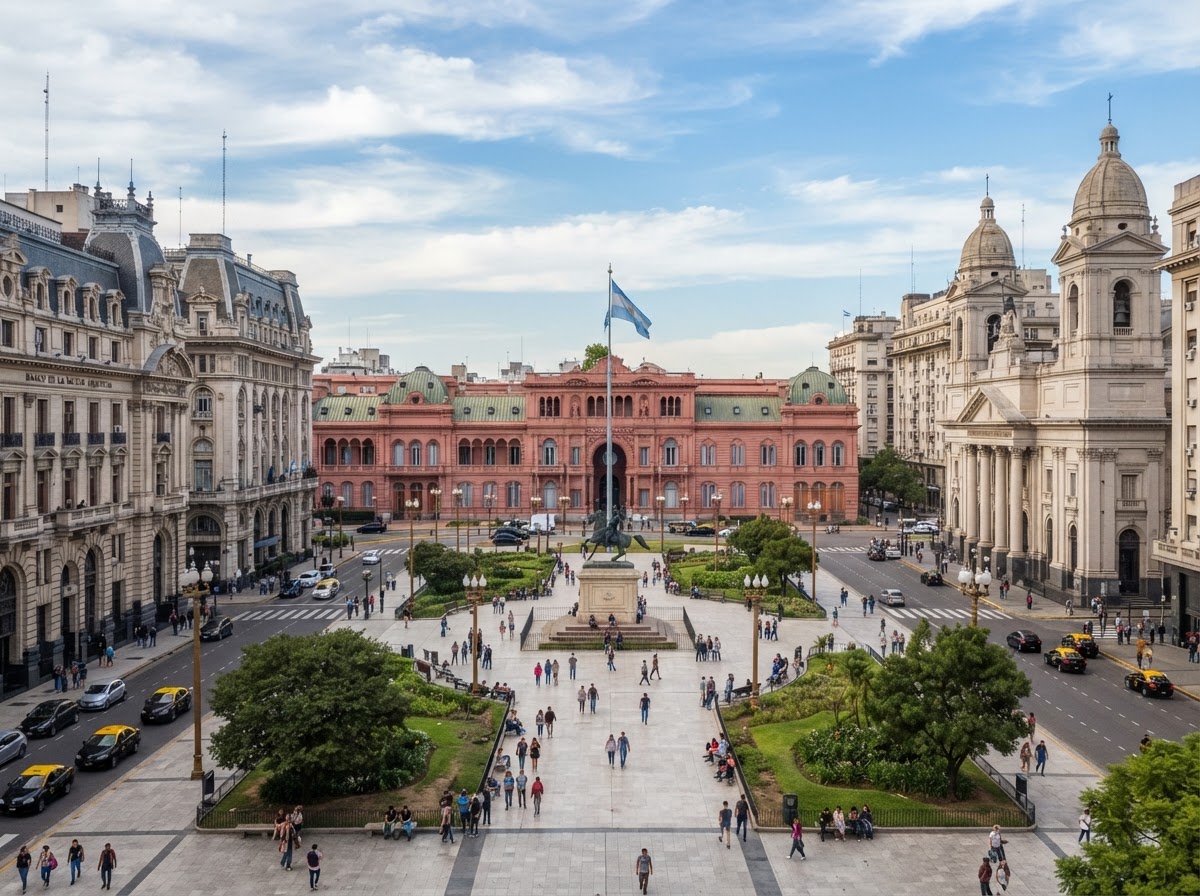
Recoleta, the grand, upscale neighbourhood, has the Recoleta Cemetery (the city of the dead, with the Evita Peron mausoleum and the ornate tombs), the Centro Cultural Kirchner (the cultural centre in the old post office) and the Museo Nacional de Bellas Artes. The Avenida Alvear is the most elegant street. The Plaza San Martin, the Retiro and the Teatro Colon (one of the world's great opera houses, with tours) are nearby. The grand, belle-epoque Buenos Aires — the wide Avenida 9 de Julio (the widest avenue in the world, with the Obelisk), the Plaza de Mayo (with the Casa Rosada, the presidential palace) and the Congreso — is the civic heart. This is the Paris of South America.
San Telmo and La Boca
San Telmo, the oldest neighbourhood, is the bohemian, colonial quarter — the cobblestone streets, the antique shops, the Sunday San Telmo Market (the Defensa street market, with the tango dancers) and the cafes. It is the atmospheric, old-Buenos Aires of the tango. La Boca, the working-class, colourful neighbourhood of the corrugated-iron houses painted in bright colours (the Caminito street), is the tourist version of the tango and the football (the Bombonera, the Boca Juniors stadium, is here). The two neighbourhoods are the cultural, colourful, tango side of Buenos Aires, and they are the contrast to the grand Recoleta. San Telmo on a Sunday is a must.
Palermo and the modern city
Palermo, the largest neighbourhood, is the fashionable, modern Buenos Aires — Palermo Soho (the boutiques, the cafes, the nightlife), Palermo Hollywood (the restaurants, the TV studios) and Palermo Chico (the upscale, residential). The Bosques de Palermo (the parks, the lakes, the rose garden) are the green heart. The MALBA (the Latin American Art Museum) has the modern art collection. The Jardín Japonés and the planetarium are in the parks. Palermo is the foodie, the nightlife and the shopping base, and it is where the young, fashionable Buenos Aires lives. It is the modern, relaxed contrast to the grand centre.
The food — steaks, empanadas and wine
Argentine food is meat, and the asado (the barbecue) is the national ritual. The beef (the lomo, the ojo de bife, the asado de tira) is the best in the world, cooked on the parrilla (the grill). The empanadas (the meat pies), the milanesa (the breaded meat), the choripan (the sausage sandwich) and the provoleta (the grilled provolone) are the classics. The wine, the Malbec from Mendoza, is the accompaniment. The ice cream (the helado, the Italian-style gelato) is the dessert. The cafe culture (the cortado, the medialuna) is the daily ritual. The dinner is late (10pm is normal) and long. Eating in Buenos Aires is one of the great pleasures of travel.
Where to stay
Palermo (Soho and Hollywood) is the fashionable, foodie, nightlife base. Recoleta is the grand, upscale, central base. San Telmo is the bohemian, atmospheric base. The Microcentro (the city centre) is the convenient, business base. Puerto Madero is the modern, waterfront base. Compare hotel options across booking platforms to find the right balance of location, price and style for your trip, and note that Buenos Aires is well-connected by subway, so any central neighbourhood is convenient. Palermo and Recoleta are the most popular for visitors.
When to visit Buenos Aires
Buenos Aires has a temperate climate (opposite to the northern hemisphere). The best times are spring (September-November) and autumn (March-May), when it is mild (20-25°C) and pleasant. Summer (December-February) is hot and humid (30°C+), and many Portenos leave for the coast. Winter (June-August) is cool (10-15°C) and the cheapest time. Buenos Aires is a year-round destination, but the shoulder seasons are the most comfortable. Avoid the major holidays (the summer, the Easter, the national holidays) if you dislike crowds. The tango and the food are year-round.
Getting to Buenos Aires
Ministro Pistarini International Airport (EZE), known as Ezeiza, is the main international airport, about 45 minutes from the city centre. Compare flights across providers — Buenos Aires is the main hub of South America, with direct flights across the world. A pre-booked private transfer is the most convenient option; compare transfer providers for fixed-price options. Taxis and ride-hailing apps are available. Aeroparque Jorge Newbery (AEP), in the city centre, handles domestic and regional flights and is very convenient. Build in time for the journey from Ezeiza, which can be an hour in traffic.
Getting around Buenos Aires
Buenos Aires' public transport includes the Subte (the subway, the first in South America, covering the main areas), the buses (the colectivos, extensive and cheap) and the trains. The Subte is the fastest for the centre. The buses cover the whole city. Ride-hailing apps (Uber, Cabify) work well. Taxis are available and cheap. Walking is the great Buenos Aires pleasure — the wide boulevards and the distinct neighbourhoods are made for walking. For day trips (Tigre, the delta, the estancias), the train or a booked tour is the way. Compare car rental options only if you plan to leave the city — driving in Buenos Aires is not necessary for visitors.
Staying connected with an eSIM
Argentina has good mobile data in the cities and along the main routes, though coverage in Patagonia and the remote areas can be patchy. A travel eSIM is the easiest way to have data from the moment you land. Compare data-only eSIMs across providers, checking coverage if you plan to travel beyond Buenos Aires, data allowances and validity. A single-country Argentina plan is usually cheapest; a regional South America plan is better value if you are combining Argentina with neighbouring countries. Download offline maps for the remote areas. Remember that most travel eSIMs are data-only, so keep your home line active for SMS verification codes.
Muslim-friendly travel in Buenos Aires
Buenos Aires has a significant Muslim community, with a history dating to the Syrian and Lebanese immigrants, and it is a Muslim-friendly city. Halal food is available, particularly in the neighbourhoods with Arab-Argentine communities (the Barrio Once, the Flores), and halal-finder apps are helpful. The Centro Cultural Islamico Rey Fahd, the largest mosque in South America, is in the Palermo area. Prayer facilities are available at the airport and in the main mosques. Buenos Aires is diverse, tolerant and welcoming, and the Arab-Argentine community means halal food is more available than in many South American cities. It is a comfortable destination for Muslim travellers.
Protecting your trip
Travel insurance is recommended for Argentina — medical care is good in the private hospitals but can be expensive, and the economic situation can be volatile. Compare policies and check what is included, particularly medical coverage. If your flight to or from Buenos Aires is delayed, cancelled or overbooked, you may be entitled to compensation under applicable air passenger rights regulations; specialist services can check your eligibility and handle the claim with the airline on your behalf. Keep your boarding pass and booking reference until you are home.
Recommended Offers
Relevant offers for this trip. You'll be redirected to the partner to complete your booking.
Flights to Buenos Aires
Check PriceTours & activities in Buenos Aires
View DealsAttraction tickets in Buenos Aires
View OfferExperiences & day tours in Argentina
View DealsCity passes & multi-attraction tickets
View PassesSelf-guided audio walks in Buenos Aires
View OfferBuenos Aires airport private transfer
Check PriceAirport transfer with English-speaking driver
View AvailabilityCompare airport transfer prices
Check PriceShared & private airport transfers
View OfferArgentina eSIM data
View DealUnlimited Argentina data eSIM
View DealFlexible global data eSIM
View DealPrepaid Argentina data eSIM
View DealLuggage storage in Buenos Aires
View DealCar rental comparison in Argentina
Check PriceCar rental across Argentina
Check PriceCar hire with price-drop protection
Check PriceCar hire with AutoEurope
Check PriceLocal car rental in Argentina
Check PriceScooter & motorbike rental
Check PriceFlight delay compensation check
Check EligibilityFlight compensation claim service
Check EligibilitySome links may be affiliate links. JalanDeals may earn a commission when you book through selected partners.
Frequently Asked Questions
How many days do I need in Buenos Aires?
Four to five days is a good first trip — enough for Recoleta, San Telmo, Palermo, the tango and the steaks. A week lets you add day trips and an estancia.
When is the best time to visit Buenos Aires?
Spring (September-November) and autumn (March-May) are mild and pleasant. Summer (December-February) is hot and humid. Winter (June-August) is cool and the cheapest time.
How do I get from Buenos Aires airport to the city?
From Ezeiza, a pre-booked private transfer is easiest (45-60 min). Taxis and ride-hailing apps are available. Aeroparque, in the centre, is very convenient for domestic flights.
Is Buenos Aires Muslim-friendly?
Yes. Buenos Aires has a significant Arab-Argentine community, halal food is available (Barrio Once, Flores), and the Centro Cultural Islamico Rey Fahd is the largest mosque in South America.
Do I need a visa for Argentina?
Argentina offers visa-free entry to many nationalities for stays up to 90 days — check the official Argentine immigration guidance for your passport before travel.
Which eSIM works in Argentina?
Compare data-only eSIMs from Airalo, Yesim, Drimsim and Saily that cover Argentina. A regional South America plan is good value if you are visiting multiple countries.
Explore more
Related destination hubs and deal categories for this trip.
Affiliate disclosure: This article contains affiliate links. JalanDeals may earn a commission when you book through selected partners, at no additional cost to you. Prices and availability are set by the provider.