
In this article
- 1. Why Cartagena is the jewel of the Caribbean
- 2. The walled city and Getsemani
- 3. The Rosario Islands and the beaches
- 4. The food — ceviche, arepas and coffee
- 5. The music and the salsa
- 6. Where to stay
- 7. When to visit Cartagena
- 8. Getting to Cartagena
- 9. Getting around Cartagena
- 10. Staying connected with an eSIM
- 11. Muslim-friendly travel in Cartagena
- 12. Protecting your trip
Cartagena is the jewel of the Colombian Caribbean, a walled colonial city of colour, music and romance on the coast, with the Rosario Islands a short boat ride away and a salsa and food scene that is among the best in the country. It is a city that has been rediscovered, and it is now one of the most popular destinations in South America — the old city is a UNESCO World Heritage site, the beaches are Caribbean, and the culture is a vibrant blend of colonial, African and Caribbean. This guide covers what to see, where to stay, when to go, how to get around, how to stay connected and how to compare current offers from multiple travel brands before completing your booking with a partner.
Why Cartagena is the jewel of the Caribbean
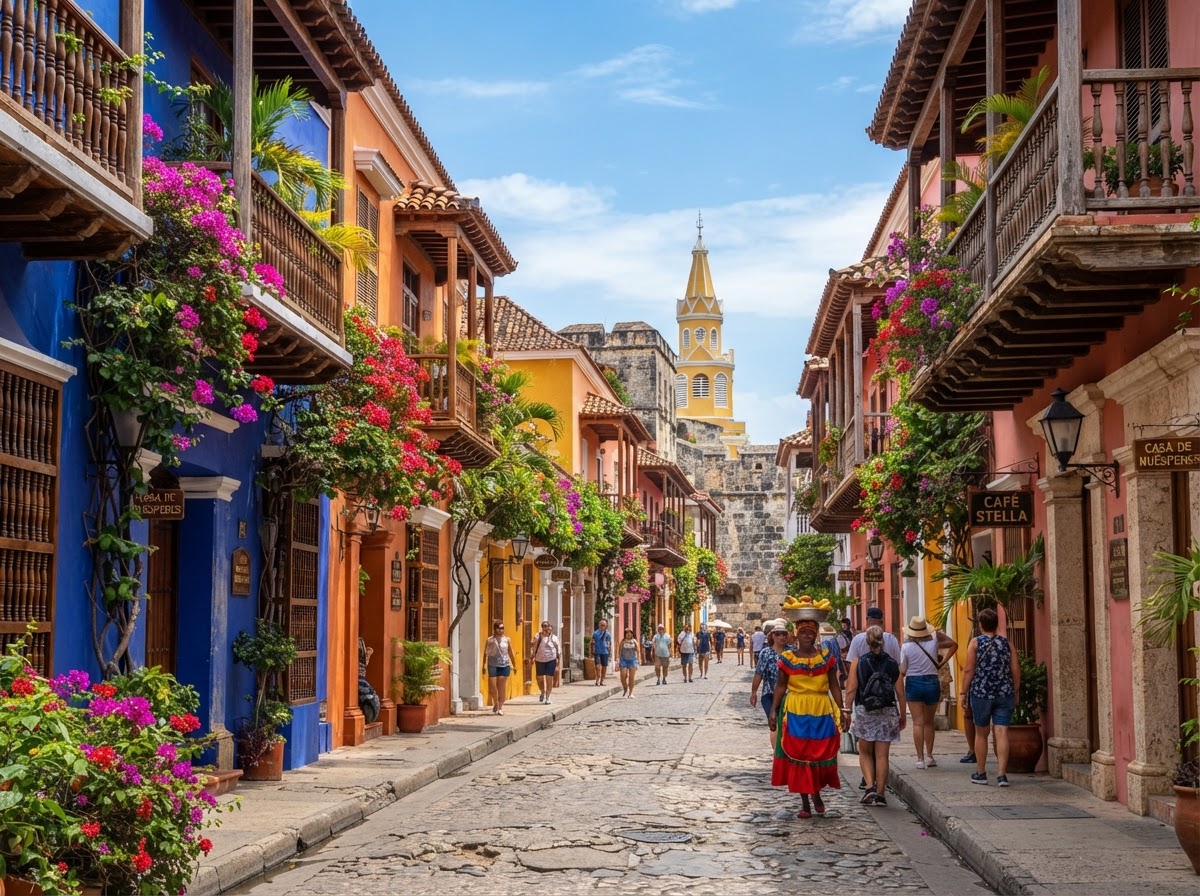
Cartagena's appeal is its beauty and its energy. The walled old city, with its colourful colonial buildings, its bougainvillea, its plazas and its churches, is one of the most beautiful colonial cities in the Americas. The music — the salsa, the champeta, the cumbia — is in the air. The food, the Caribbean and the Colombian fusion, is excellent. The Rosario Islands, a short boat ride away, are the Caribbean escape. The city is safe, walkable and romantic, and it has become the favourite destination for the Colombian and the international traveller. Cartagena is the easy, beautiful, vibrant introduction to Colombia.
The walled city and Getsemani
The walled old city (Ciudad Amurallada) is the heart of Cartagena — a UNESCO World Heritage site of colonial architecture, with the Plaza de la Aduana, the Plaza Santo Domingo, the Plaza de los Coches (with the clock tower), the Cathedral and the San Pedro Claver church. The city walls, the Castillo de San Felipe de Barajas (the largest Spanish fort in the Americas) and the Las Bovedas (the old dungeons, now craft shops) are the defences. Getsemani, the neighbourhood just outside the walls, is the bohemian, colourful, up-and-coming quarter, with the street art, the Plaza de la Trinidad and the nightlife. The old city and Getsemani are the walkable, atmospheric heart.
The Rosario Islands and the beaches
The Rosario Islands (Islas del Rosario), a national park about an hour by boat from Cartagena, are the Caribbean escape — coral islands with white-sand beaches, clear water and snorkelling. Isla Grande, Isla Baru (with the famous Playa Blanca) and the private islands (Isla Majagua, Isla Tierra Bomba) are the main ones. A day trip by boat, or an overnight at an island hotel, is the classic. The beaches of Bocagrande and Castillogrande, in the city, are the urban beaches, but the Rosario Islands are the real Caribbean. The snorkelling and the diving on the coral reefs are the draw. Compare boat and island tour options across providers.
The food — ceviche, arepas and coffee
Cartagena's food is a Caribbean-Colombian fusion. The ceviche (the raw fish cured in lime), the fried fish with coconut rice (the pargo frito), the arepas (the corn cakes), the empanadas and the carimanolas (the yuca fritters) are the classics. The street food (the arepa de huevo, the mango biche) is the daily snack. The coffee, the Colombian arabica, is the national drink. The fruit (the lulo, the guanabana, the maracuya) is the tropical abundance. The restaurants in the old city and Getsemani range from the traditional to the modern fusion. The sunset dinner on the city walls is a classic. Eating in Cartagena is a Caribbean pleasure.
The music and the salsa
Cartagena's music is the soundtrack of the city. The salsa, the champeta (the Afro-Caribbean rhythm), the cumbia and the reggaeton are everywhere. The Cafe Havana, in the old city, is the classic salsa club. The Plaza de la Trinidad in Getsemani, in the evening, is the street party. The Bazurto Social Club is the local, late-night spot. The music is not a show for tourists; it is the life of the city. The dance, the salsa and the champeta, is the participation. The nightlife, from the old city bars to the Getsemani street parties to the clubs, is one of the best in Colombia. The music is the soul of Cartagena.
Where to stay
The walled old city is the most atmospheric and the most convenient, with the boutique hotels in the colonial buildings. Getsemani is the bohemian, cheaper, nightlife alternative. Bocagrande is the modern, beachfront, business area. Castillogrande is the quiet, upscale, residential area. The Rosario Islands are for the island escape. Compare hotel options across booking platforms to find the right balance of location, price and style for your trip, and note that the old city is the most popular and the most expensive, but the atmosphere is worth it. Getsemani is the value alternative with the same walkability.
When to visit Cartagena
Cartagena has a tropical climate. The best time is the dry season, from December to April, when it is sunny and warm (30-32°C) — this is peak season. The wet season (May-November) is hotter, more humid and has heavy but often short rains; it is cheaper and less crowded. The water is warm year-round (28-30°C). Cartagena is a year-round destination, but the dry season is the most comfortable. Avoid the major holidays (the Christmas, the Hay Festival in January, the independence in November) if you dislike crowds and high prices. The breeze from the sea makes the heat more bearable than inland.
Getting to Cartagena
Rafael Nunez International Airport (CTG), in the city, is the main airport. Compare flights across providers — Cartagena is well connected to the US, the Americas and Europe (with direct flights from several cities). The airport is very close to the old city (about 15 minutes). A pre-booked private transfer is the most convenient option; compare transfer providers for fixed-price options. Taxis are available — agree the fare or use the app. Build in minimal time for the transfer, which is short. For the Rosario Islands, the boats depart from the port (Muelle de la Bodeguita or Muelle Turistico).
Getting around Cartagena
The old city and Getsemani are walkable — that is the best way to see them. The taxis are available and cheap — agree the fare or use the app. The ride-hailing apps (Uber, inDriver, Cabify) work in the city. The buses (the Transcaribe, the chalupa buses) cover the wider city. For the Rosario Islands, the boats depart from the port, and the island transfers are by boat. For the wider Caribbean coast (Santa Marta, Tayrona), compare car rental options — driving is on the right, and the roads are good. Within the old city, you walk. Cartagena is a place to take your time and enjoy the walk.
Staying connected with an eSIM
Colombia has good mobile data in the cities and along the main routes, though coverage on the islands and the remote areas can be patchy. A travel eSIM is the easiest way to have data from the moment you land. Compare data-only eSIMs across providers, checking coverage if you plan to travel beyond Cartagena, data allowances and validity. A single-country Colombia plan is usually cheapest; a regional South America plan is better value if you are combining Colombia with neighbouring countries. Download offline maps for the islands. Remember that most travel eSIMs are data-only, so keep your home line active for SMS verification codes.
Muslim-friendly travel in Cartagena
Cartagena has a small Muslim community, and it is a reasonably Muslim-friendly city, though it requires some planning. Halal food is limited but available — a few restaurants in the old city and the city offer halal options, and halal-finder apps are helpful. The mezquita (the mosque) in Cartagena serves the small community. Prayer facilities are limited, so plan ahead. Cartagena is tolerant and welcoming, and the Caribbean culture is diverse. The seafood (the ceviche, the fried fish) and the vegetarian options offer some halal-adjacent choices. With a little research, Cartagena is a comfortable destination for Muslim travellers, though the halal options are fewer than in larger Muslim communities.
Protecting your trip
Travel insurance is recommended for Colombia — medical care is good in the private clinics but can be expensive, and the heat can be intense. Compare policies and check what is included, particularly medical coverage. Cartagena is safe for visitors, but normal urban awareness is advised (keep valuables out of sight, avoid walking alone at night in unlit areas). If your flight to or from Cartagena is delayed, cancelled or overbooked, you may be entitled to compensation under applicable air passenger rights regulations; specialist services can check your eligibility and handle the claim with the airline on your behalf. Keep your boarding pass and booking reference until you are home.
Recommended Offers
Relevant offers for this trip. You'll be redirected to the partner to complete your booking.
Flights to Cartagena
Check PriceTours & activities in Cartagena
View DealsAttraction tickets in Cartagena
View OfferExperiences & day tours in Colombia
View DealsCity passes & multi-attraction tickets
View PassesSelf-guided audio walks in Cartagena
View OfferCartagena airport private transfer
Check PriceAirport transfer with English-speaking driver
View AvailabilityCompare airport transfer prices
Check PriceShared & private airport transfers
View OfferColombia eSIM data
View DealUnlimited Colombia data eSIM
View DealFlexible global data eSIM
View DealPrepaid Colombia data eSIM
View DealLuggage storage in Cartagena
View DealCar rental comparison in Colombia
Check PriceCar rental across Colombia
Check PriceCar hire with price-drop protection
Check PriceCar hire with AutoEurope
Check PriceLocal car rental in Colombia
Check PriceScooter & motorbike rental
Check PriceFlight delay compensation check
Check EligibilityFlight compensation claim service
Check EligibilitySome links may be affiliate links. JalanDeals may earn a commission when you book through selected partners.
Frequently Asked Questions
How many days do I need in Cartagena?
Three to four days is a good first trip — enough for the walled city, Getsemani, a Rosario Islands day trip and the food. A week lets you add Santa Marta and Tayrona.
When is the best time to visit Cartagena?
December to April is the dry, sunny season (peak). May to November is the hot, wet season — cheaper but with heavy rains. The water is warm year-round.
How do I get from Cartagena airport to the old city?
The airport is 15 minutes from the old city. A pre-booked private transfer is easiest; taxis are available — agree the fare or use the app.
Is Cartagena Muslim-friendly?
Reasonably so, with planning. Halal food is limited but available, a small mosque serves the community, and the city is tolerant. Use halal-finder apps and plan prayer facilities.
Do I need a visa for Colombia?
Colombia offers visa-free entry to many nationalities for stays up to 180 days — check the official Colombian immigration guidance for your passport before travel.
Which eSIM works in Colombia?
Compare data-only eSIMs from Airalo, Yesim, Drimsim and Saily that cover Colombia. A regional South America plan is good value if you are visiting multiple countries.
Explore more
Related destination hubs and deal categories for this trip.
Affiliate disclosure: This article contains affiliate links. JalanDeals may earn a commission when you book through selected partners, at no additional cost to you. Prices and availability are set by the provider.