
In this article
- 1. Why Costa Rica is the ecotourism model
- 2. Arenal Volcano and the hot springs
- 3. Monteverde and the cloud forest
- 4. The beaches — Manuel Antonio and the Pacific
- 5. The wildlife and the national parks
- 6. Where to stay
- 7. When to visit Costa Rica
- 8. Getting to Costa Rica
- 9. Getting around Costa Rica
- 10. Staying connected with an eSIM
- 11. Muslim-friendly travel in Costa Rica
- 12. Protecting your trip
Costa Rica is the ecotourism success story of Central America — a small country that turned its rainforests, volcanoes and beaches into a model of sustainable tourism, where the 'pura vida' (pure life) philosophy is more than a slogan. It is a place where you can hike a volcano in the morning, zip-line through a cloud forest in the afternoon and surf a Pacific beach at sunset, all in a country smaller than many US states. This guide covers what to see, where to stay, when to go, how to get around, how to stay connected and how to compare current offers from multiple travel brands before completing your booking with a partner.
Why Costa Rica is the ecotourism model
Costa Rica's appeal is its commitment to nature. Over a quarter of the country is protected in national parks and reserves, and the biodiversity is extraordinary — more than 500,000 species in a country the size of West Virginia. The 'pura vida' philosophy — a relaxed, optimistic approach to life — is genuine and infectious. The infrastructure for ecotourism is the best in Central America, with ecolodges, guided tours and good roads to the main sights. It is also safe, stable and peaceful (it abolished its army in 1948). Costa Rica is the easy, rewarding introduction to the neotropics.
Arenal Volcano and the hot springs
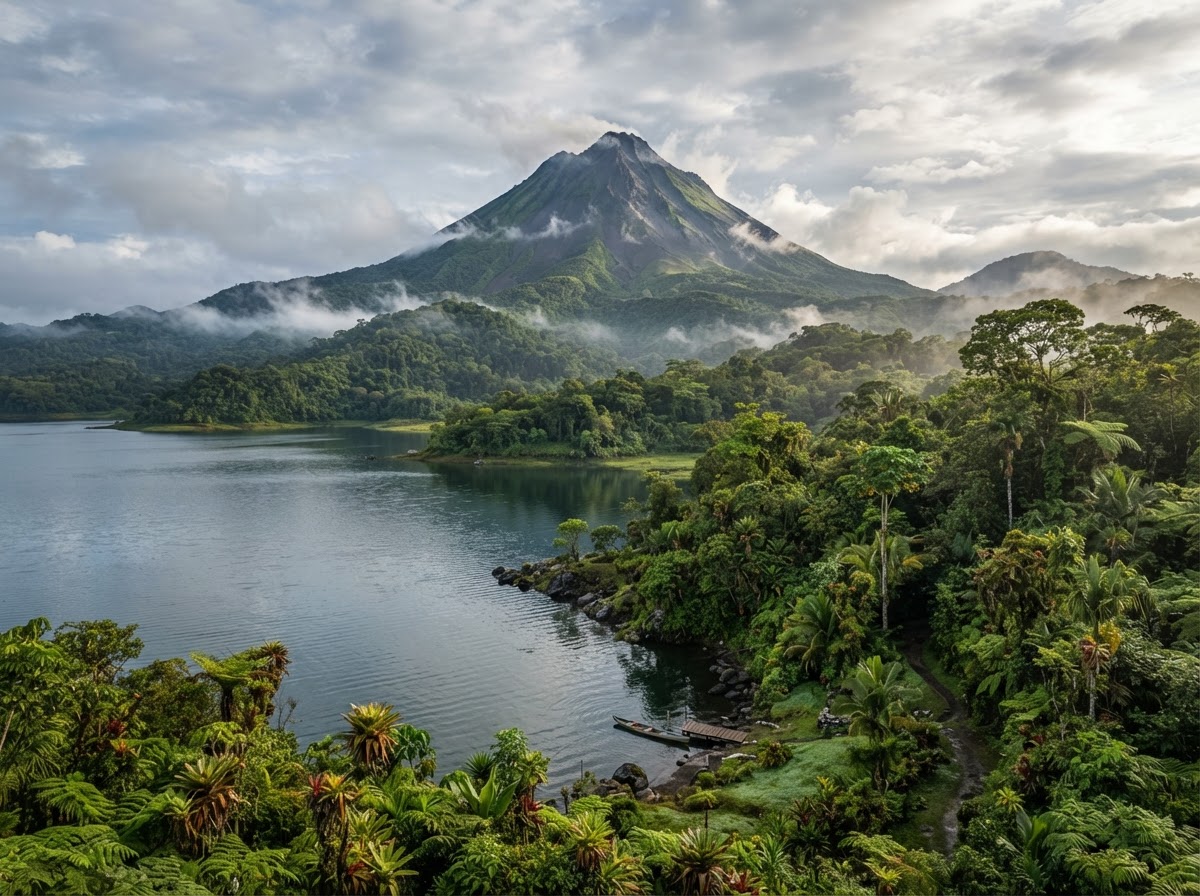
Arenal, the near-perfect cone volcano near La Fortuna, is the iconic sight of Costa Rica (though it has been dormant since 2010). The Arenal Volcano National Park has the lava flows, the trails and the view. The hot springs, heated by the volcano, are the relaxation — the Tabacón, the Baldi and the EcoTermales are the main ones, with thermal pools in the rainforest. The La Fortuna Waterfall, a 70m cascade, is a swim. The Arenal Hanging Bridges, a series of suspension bridges through the canopy, are a unique walk. The Mistico Arenal Hanging Bridges Park is the main one. Arenal is the adventure and relaxation hub.
Monteverde and the cloud forest
Monteverde, in the mountains northwest of Arenal, is the cloud forest — a high-altitude rainforest that is perpetually misty, with epiphytes, mosses and a unique ecosystem. The Monteverde Cloud Forest Reserve and the Santa Elena Cloud Forest Reserve are the main reserves, with trails and guides. The zip-lines (the Sky Trek, the Original Canopy Tour) are the adrenaline way to see the canopy. The hanging bridges are the calmer way. The quetzal, the rare bird, is the prize for birders. The cloud forest is a different world from the lowland rainforest, cooler and damper, and it is one of the most biodiverse places on earth.
The beaches — Manuel Antonio and the Pacific
Costa Rica has both Pacific and Caribbean coasts. On the Pacific, Manuel Antonio National Park, near Quepos, is the most popular — a small park with white-sand beaches, rainforest and monkeys (capuchin, howler, squirrel). Tamarindo, in the northwest, is the surf and resort town. Santa Teresa and Montezuma, on the Nicoya Peninsula, are the bohemian surf towns. Jaco, near San Jose, is the closest beach to the capital. On the Caribbean, Puerto Viejo and Cahuita have a more Afro-Caribbean culture, reggae and the coral reef. The beaches are beautiful, the surf is world-class, and the wildlife is everywhere.
The wildlife and the national parks
Costa Rica's wildlife is the reason to visit. The sloths (two-toed and three-toed) are the iconic sighting. The monkeys (howler, capuchin, spider, squirrel) are everywhere. The toucans, the macaws, the quetzals and the hummingbirds are the birds. The turtles (the arribada at Ostional, the leatherbacks at Tortuguero) are the nesting. The frogs (the red-eyed tree frog) are the amphibians. The national parks — Manuel Antonio, Tortuguero, Corcovado (the most biodiverse), Cahuita, Palo Verde — are the protected homes. A guide is essential for the best sightings. Compare tour options across providers for guided wildlife tours.
Where to stay
San Jose, the capital, is the arrival point but not a destination. La Fortuna (Arenal) is the volcano and hot springs base. Monteverde (Santa Elena) is the cloud forest base. Manuel Antonio is the beach and park base. Tamarindo and Santa Teresa are the surf bases. Puerto Viejo is the Caribbean base. The ecolodges, in the reserves and the parks, are the immersive option. Compare hotel options across booking platforms to find the right balance of location, price and style for your trip, and note that Costa Rica is spread out, so plan your itinerary by region to minimise driving.
When to visit Costa Rica
Costa Rica has a tropical climate with a dry and a wet season. The best time is the dry season, from December to April, when it is sunny and less humid — this is peak season. The wet season (May-November) is greener, cheaper and less crowded, with heavy but often short afternoon rains. The Caribbean coast has a different pattern, with a drier period in September-October. The water is warm year-round. Costa Rica is a year-round destination, but the dry season is the most comfortable. The rainforests are at their greenest in the wet season, which has its own appeal.
Getting to Costa Rica
Juan Santamaria International Airport (SJO), near San Jose, is the main airport. Daniel Oduber Airport (LIR), in Liberia, serves the northwest (the Nicoya Peninsula, Arenal). Compare flights across providers — Costa Rica is well connected across the Americas. A pre-booked private transfer is the most convenient option, especially to the parks; compare transfer providers for fixed-price options. The shared shuttles (Interbus, Easy Ride) are the mid-range option. Taxis and ride-hailing apps are available. Build in time for the journey to the parks, which can be a few hours on mountain roads.
Getting around Costa Rica
Costa Rica's roads range from good highways to rough mountain tracks. The tourist shuttles (Interbus, Easy Ride) are the comfortable, door-to-door option between the main sights. The public buses are the budget option but can be slow and indirect. For the parks, the reserves and the freedom to explore, compare car rental options — a 4x4 is recommended for the mountain roads and the wet season; driving is on the right. Domestic flights (Sansa, Nature Air) connect the main regions. Within the parks, you walk or take a boat. Costa Rica is a place where the journey is part of the experience.
Staying connected with an eSIM
Costa Rica has decent mobile data in the cities and along the main routes, though coverage in the parks and the mountains can be patchy. A travel eSIM is the easiest way to have data from the moment you land. Compare data-only eSIMs across providers, checking coverage in the areas you plan to visit, data allowances and validity. A single-country Costa Rica plan is usually cheapest; a regional Central America plan is better value if you are combining Costa Rica with neighbouring countries. Download offline maps for the parks. Remember that most travel eSIMs are data-only, so keep your home line active for SMS verification codes.
Muslim-friendly travel in Costa Rica
Costa Rica has a small Muslim community, and it is a reasonably Muslim-friendly country, though it requires some planning. Halal food is limited but available — a few restaurants in San Jose and the tourist areas offer halal options, and halal-finder apps are helpful. The Centro Islamico de Costa Rica in San Jose is the main mosque. Prayer facilities are limited outside the capital, so plan ahead. Costa Rica is tolerant, peaceful and welcoming, and the 'pura vida' philosophy is inclusive. With a little research, Costa Rica is a comfortable destination for Muslim travellers, though the halal options are fewer than in larger cities.
Protecting your trip
Travel insurance is recommended for Costa Rica — medical care is good in San Jose but limited in the parks, and adventure activities (zip-lining, rafting, surfing) carry risks. Compare policies and check what is included, particularly coverage for adventure sports and medical evacuation. If your flight to or from Costa Rica is delayed, cancelled or overbooked, you may be entitled to compensation under applicable air passenger rights regulations; specialist services can check your eligibility and handle the claim with the airline on your behalf. Keep your boarding pass and booking reference until you are home.
Recommended Offers
Relevant offers for this trip. You'll be redirected to the partner to complete your booking.
Flights to Costa Rica
Check PriceTours & activities in Costa Rica
View DealsAttraction tickets in Costa Rica
View OfferExperiences & day tours in Costa Rica
View DealsCity passes & multi-attraction tickets
View PassesSelf-guided audio walks in Costa Rica
View OfferCosta Rica airport private transfer
Check PriceAirport transfer with English-speaking driver
View AvailabilityCompare airport transfer prices
Check PriceShared & private airport transfers
View OfferCosta Rica eSIM data
View DealUnlimited Costa Rica data eSIM
View DealFlexible global data eSIM
View DealPrepaid Costa Rica data eSIM
View DealLuggage storage in Costa Rica
View DealCar rental comparison in Costa Rica
Check PriceCar rental across Costa Rica
Check PriceCar hire with price-drop protection
Check PriceCar hire with AutoEurope
Check PriceLocal car rental in Costa Rica
Check PriceScooter & motorbike rental
Check PriceFlight delay compensation check
Check EligibilityFlight compensation claim service
Check EligibilitySome links may be affiliate links. JalanDeals may earn a commission when you book through selected partners.
Frequently Asked Questions
How many days do I need in Costa Rica?
Seven to ten days is a good first trip — enough for Arenal, Monteverde and a beach. Two weeks lets you add Corcovado or the Caribbean coast.
When is the best time to visit Costa Rica?
December to April is the dry, sunny season (peak). May to November is the wet, green season — cheaper and less crowded. The Caribbean coast is drier in September-October.
How do I get from Costa Rica airport to the parks?
A pre-booked private transfer or a tourist shuttle is the comfortable option. A 4x4 rental is best for the mountain roads. Build in time — the parks are a few hours away.
Is Costa Rica Muslim-friendly?
Reasonably so, with planning. Halal food is limited but available in San Jose, the main mosque is there, and the country is tolerant and welcoming. Use halal-finder apps.
Do I need a visa for Costa Rica?
Costa Rica offers visa-free entry to many nationalities for stays up to 90 days — check the official Costa Rican immigration guidance for your passport before travel.
Which eSIM works in Costa Rica?
Compare data-only eSIMs from Airalo, Yesim, Drimsim and Saily that cover Costa Rica. Coverage in the parks and mountains can be patchy, so download offline maps.
Explore more
Related destination hubs and deal categories for this trip.
Deal categories
Affiliate disclosure: This article contains affiliate links. JalanDeals may earn a commission when you book through selected partners, at no additional cost to you. Prices and availability are set by the provider.