
In this article
- 1. What makes Doha distinct
- 2. Souq Waqif — the heart of old Doha
- 3. The Museum of Islamic Art and the Corniche
- 4. The National Museum and Katara
- 5. The desert and the inland sea
- 6. Where to stay
- 7. When to visit Doha
- 8. Getting to Doha
- 9. Getting around Doha
- 10. Staying connected with an eSIM
- 11. Muslim-friendly travel in Doha
- 12. Protecting your trip
Doha is Qatar's fast-rising capital — a city that has transformed in a generation from a small port into a modern metropolis of museums, skyscrapers, artificial islands and a beautifully restored old souk. It is smaller and more intimate than its Gulf neighbours, which makes it a rewarding stopover or short-break destination: you can see the highlights in two days, eat superbly, visit world-class museums, take a desert trip and still have time to wander. This guide covers what to see, where to stay, when to go, how to get around, how to stay connected and how to compare current offers from multiple travel brands before completing your booking with a partner.
What makes Doha distinct
Doha's character is a careful balance of old and new. Unlike some Gulf cities that demolished their heritage, Doha restored its old market (Souq Waqif) and built its new cultural institutions beside it. The result is a city where you can drink karak tea in a 19th-century-style souk in the morning and visit a starchitect-designed museum in the afternoon. It is compact, walkable in parts, and has invested heavily in culture — the Museum of Islamic Art, the National Museum of Qatar and the soon-to-open art districts give it a seriousness beyond its size. It is also one of the most Muslim-friendly cities anywhere, which makes it comfortable for a very wide range of travellers.
Souq Waqif — the heart of old Doha
Souq Waqif is the restored old market and the soul of the city. Its mud-walled alleys house spice stalls, textile shops, falcon sellers, gold merchants, tea houses and restaurants. It is at its best in the evening when the weather cools and the locals come out — the cafes fill, the shisha pipes light up, and the atmosphere is wonderful. Eat at one of the traditional restaurants (try machboos, the national rice dish, or harees), drink karak (cardamom tea) at a stall, and wander the falcon souk. The souk is also the best place to buy spices, oud perfume and souvenirs. Bargaining is expected on handicrafts. It is genuinely authentic rather than a tourist reconstruction.
The Museum of Islamic Art and the Corniche
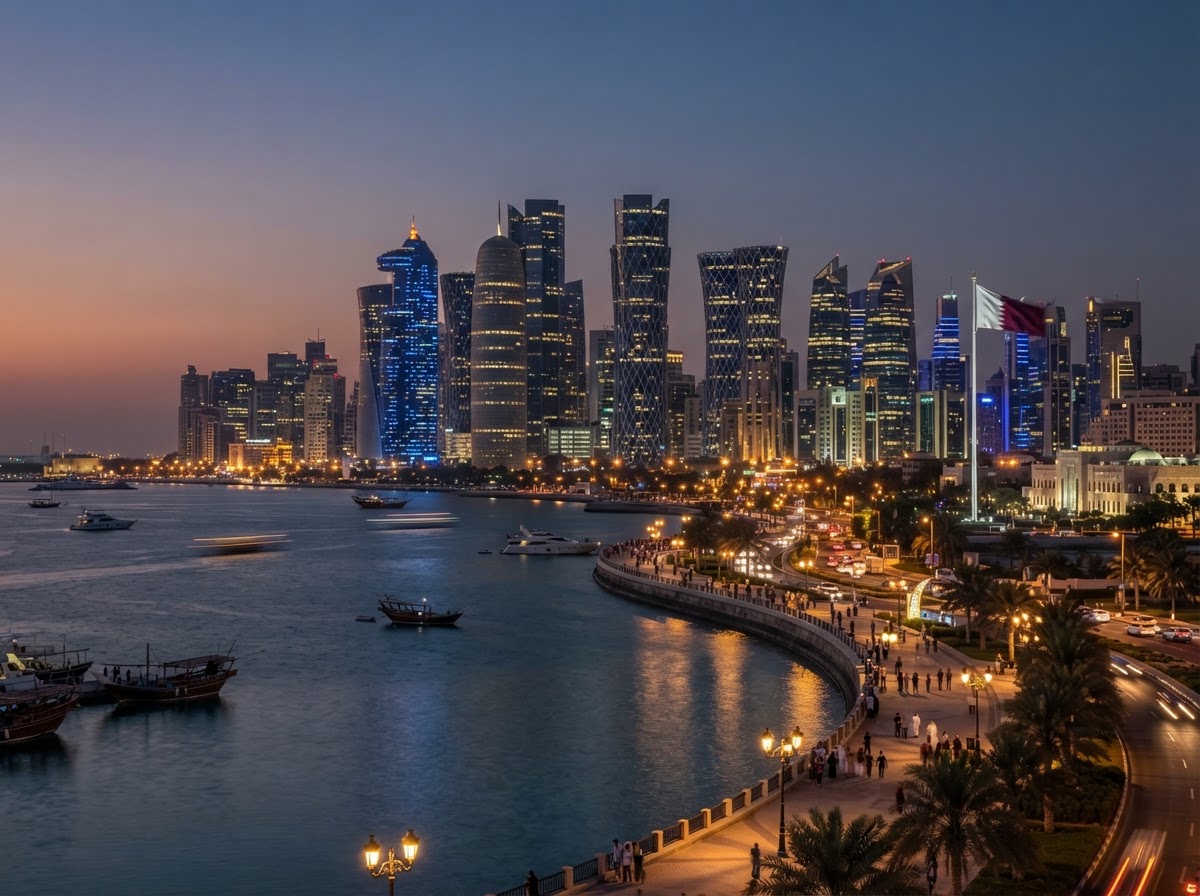
The Museum of Islamic Art, designed by I.M. Pei, sits on its own artificial island at the end of the Corniche and is one of the great museums of the region. Its collection spans 1,400 years of Islamic art — calligraphy, ceramics, metalwork, textiles, jewellery and manuscripts — beautifully presented. The building itself, with its geometric facade and light-filled atrium, is worth the visit alone. The surrounding park is a lovely place to walk. The Corniche, the 7km waterfront promenade, curves along Doha Bay and is the city's great public space — walk it at sunset for the skyline views and the cooler air. The traditional dhow boats moored along it offer short cruises.
The National Museum and Katara
The National Museum of Qatar, designed by Jean Nouvel as a series of interlocking 'desert rose' discs, is a stunning building that tells the story of Qatar from its geological formation to its modern development. The building is as much a reason to visit as the exhibits. Katara Cultural Village, to the north, is a purpose-built cultural district of theatres, galleries, mosques, an amphitheatre and restaurants, with a public beach. It hosts festivals and events and is a pleasant place to spend an afternoon. The Msheireb Downtown district, a new development of low-rise, traditional-inspired architecture, is worth a walk for its design and the Msheireb Museums in restored heritage houses.
The desert and the inland sea
Just beyond the city, the desert begins. The headline trip is to Khor Al Adaid, the 'inland sea' — a UNESCO-recognised inlet of the Arabian Gulf reachable only by 4x4 across the dunes, where the sea cuts deep into the desert. The dune-bashing journey is part of the experience, and the sunset over the inland sea is spectacular. Tours typically include dune driving, a stop at the inland sea, and a sunset; some include a BBQ dinner. Book through a reputable operator — compare tour options across providers. The desert is best in the cooler months; in summer, evening trips are the only comfortable option. Camel rides and sandboarding are usually included.
Where to stay
Doha's hotel scene is excellent and often more affordable than its Gulf neighbours. West Bay, the modern skyscraper district, has the big international hotels and the skyline views. The Corniche and Msheireb area puts you near the souk and the museums. The Pearl, an artificial island, offers upscale apartment-style hotels and dining. Lusail, the new city to the north, has modern hotels and the stadium district. Compare hotel options across booking platforms to find the right balance of location, price and style for your trip, and note that prices are much lower in the hot summer than in the cool winter peak.
When to visit Doha
The best time is the cooler season, from November to March, when daytime temperatures are a pleasant 22-28°C and evenings are cool. This is peak season. April and October are warm shoulder months. From May to September, temperatures regularly exceed 40°C and outdoor activity is limited to early morning and late evening — this is when hotels are cheapest and malls and museums are the main activity. Ramadan (dates vary) affects daytime dining, though tourist hotels continue to serve in screened areas, and the iftar experience is wonderful. Whenever you go, the air-conditioned indoor spaces are excellent and the evenings are pleasant year-round.
Getting to Doha
Hamad International Airport (DOH) is the hub of Qatar Airways and one of the world's best airports, with direct flights across the globe. Compare flights across providers — Doha is a major hub between East and West. The airport is close to the city, so transfer times are short. A pre-booked private transfer is the most convenient option if you have luggage; compare transfer providers for fixed-price meet-and-greet services. Taxis are metered, plentiful and reasonably priced. The Doha Metro connects the airport to the main districts.
Getting around Doha
Doha is easy to navigate. The Doha Metro is clean, modern and covers the main spine from the airport through West Bay and Lusail. Taxis are cheap and metered. Ride-hailing apps work well. For the desert trips, you need a 4x4 with a guide — book a tour rather than driving yourself. For general exploration, compare car rental options if you want full flexibility, though the city is well served by metro and taxi. The city is spread out, so plan your days by area. Walking is pleasant along the Corniche and in the souk and Msheireb, but the heat for much of the year makes indoor and air-conditioned transport the norm.
Staying connected with an eSIM
Qatar has fast, reliable mobile data, and a travel eSIM is the easiest way to have it from the moment you land. Compare data-only eSIMs across providers, checking data allowances and validity. Note that Qatar has some internet restrictions (certain VoIP and messaging services may be limited), so check what works before you rely on it. A single-country Qatar plan is usually cheapest; a regional Middle East plan is better value if you are combining Doha with neighbouring Gulf countries. Remember that most travel eSIMs are data-only, so keep your home line active for SMS verification codes.
Muslim-friendly travel in Doha
Doha is one of the most Muslim-friendly destinations in the world. Qatar is a Muslim-majority country, halal food is the norm across the city, and mosques are plentiful (the Education City Mosque and the State Grand Mosque are architectural highlights). Prayer facilities are available everywhere — in malls, airports and public buildings. During Ramadan, the city adapts: daytime eating in public is restricted, but tourist hotels and malls continue to serve in screened areas, and iftar meals after sunset are a wonderful communal experience. Dress modestly outside the beach areas. Doha is safe, family-friendly and welcoming to all.
Protecting your trip
Travel insurance is recommended for Qatar — medical care is excellent but expensive, and the summer heat can cause issues for unprepared visitors. Compare policies and check what is included. If your flight to or from Doha is delayed, cancelled or overbooked, you may be entitled to compensation under applicable air passenger rights regulations; specialist services can check your eligibility and handle the claim with the airline on your behalf. Keep your boarding pass and booking reference until you are home.
Recommended Offers
Relevant offers for this trip. You'll be redirected to the partner to complete your booking.
Flights to Doha
Check PriceTours & activities in Doha
View DealsAttraction tickets in Doha
View OfferExperiences & day tours in Qatar
View DealsCity passes & multi-attraction tickets
View PassesSelf-guided audio walks in Doha
View OfferDoha airport private transfer
Check PriceAirport transfer with English-speaking driver
View AvailabilityCompare airport transfer prices
Check PriceShared & private airport transfers
View OfferQatar eSIM data
View DealUnlimited Qatar data eSIM
View DealFlexible global data eSIM
View DealPrepaid Qatar data eSIM
View DealLuggage storage in Doha
View DealCar rental comparison in Qatar
Check PriceCar rental across Qatar
Check PriceCar hire with price-drop protection
Check PriceCar hire with AutoEurope
Check PriceLocal car rental in Qatar
Check PriceScooter & motorbike rental
Check PriceFlight delay compensation check
Check EligibilityFlight compensation claim service
Check EligibilitySome links may be affiliate links. JalanDeals may earn a commission when you book through selected partners.
Frequently Asked Questions
How many days do I need in Doha?
Two to three days is enough for the souk, the museums, the Corniche and a desert trip. It is a popular stopover between longer flights.
When is the best time to visit Doha?
November to March is the cool, pleasant peak season. April and October are warm. May to September is very hot (40°C+) and best for indoor activities. Ramadan affects daytime dining.
How do I get from Doha airport to the city?
Hamad International is close to the city. The Doha Metro connects the airport to the main districts. A pre-booked private transfer is easiest with luggage; taxis are metered and reasonably priced.
Is Doha Muslim-friendly?
Very. Qatar is Muslim-majority, halal food is the norm, mosques are plentiful, and prayer facilities are everywhere. Ramadan is a special time to visit.
Do I need a visa for Qatar?
Qatar offers visa-free or visa-on-arrival entry to many nationalities, and an ETA (Hayya) for others — check the official Qatari immigration guidance for your passport before travel.
Which eSIM works in Qatar?
Compare data-only eSIMs from Airalo, Yesim, Drimsim and Saily that cover Qatar. Note some VoIP services may be restricted; check what works before you rely on it.
Explore more
Related destination hubs and deal categories for this trip.
Deal categories
Affiliate disclosure: This article contains affiliate links. JalanDeals may earn a commission when you book through selected partners, at no additional cost to you. Prices and availability are set by the provider.