
In this article
- 1. Why the Dominican Republic is the Caribbean's most visited
- 2. Punta Cana and the east coast
- 3. Santo Domingo and the colonial zone
- 4. The north coast — Cabarete and Las Galeras
- 5. The interior and Pico Duarte
- 6. Where to stay
- 7. When to visit the Dominican Republic
- 8. Getting to the Dominican Republic
- 9. Getting around the Dominican Republic
- 10. Staying connected with an eSIM
- 11. Muslim-friendly travel in the Dominican Republic
- 12. Protecting your trip
The Dominican Republic is the most visited country in the Caribbean, a place of white-sand beaches, all-inclusive resorts, the oldest colonial city in the Americas and a mountainous interior that most tourists never see. It is a country of surprising variety — the resort life of Punta Cana, the history of Santo Domingo, the surf of the north coast, and the peaks and valleys of the interior. This guide covers what to see, where to stay, when to go, how to get around, how to stay connected and how to compare current offers from multiple travel brands before completing your booking with a partner.
Why the Dominican Republic is the Caribbean's most visited
The Dominican Republic's appeal is its combination of accessible Caribbean beauty, excellent resort infrastructure and genuine variety. The beaches are some of the best in the Caribbean — the east coast (Punta Cana) has the long, white-sand stretches; the north coast (Cabarete, Las Galeras) has the surf and the wilder beaches. The all-inclusive resort is the dominant option, and the value is among the best in the Caribbean. The history, in Santo Domingo's colonial zone, is the oldest in the Americas. The interior, with the highest peak in the Caribbean (Pico Duarte, 3,098m), is the hidden side. It is the easy, rewarding Caribbean destination.
Punta Cana and the east coast
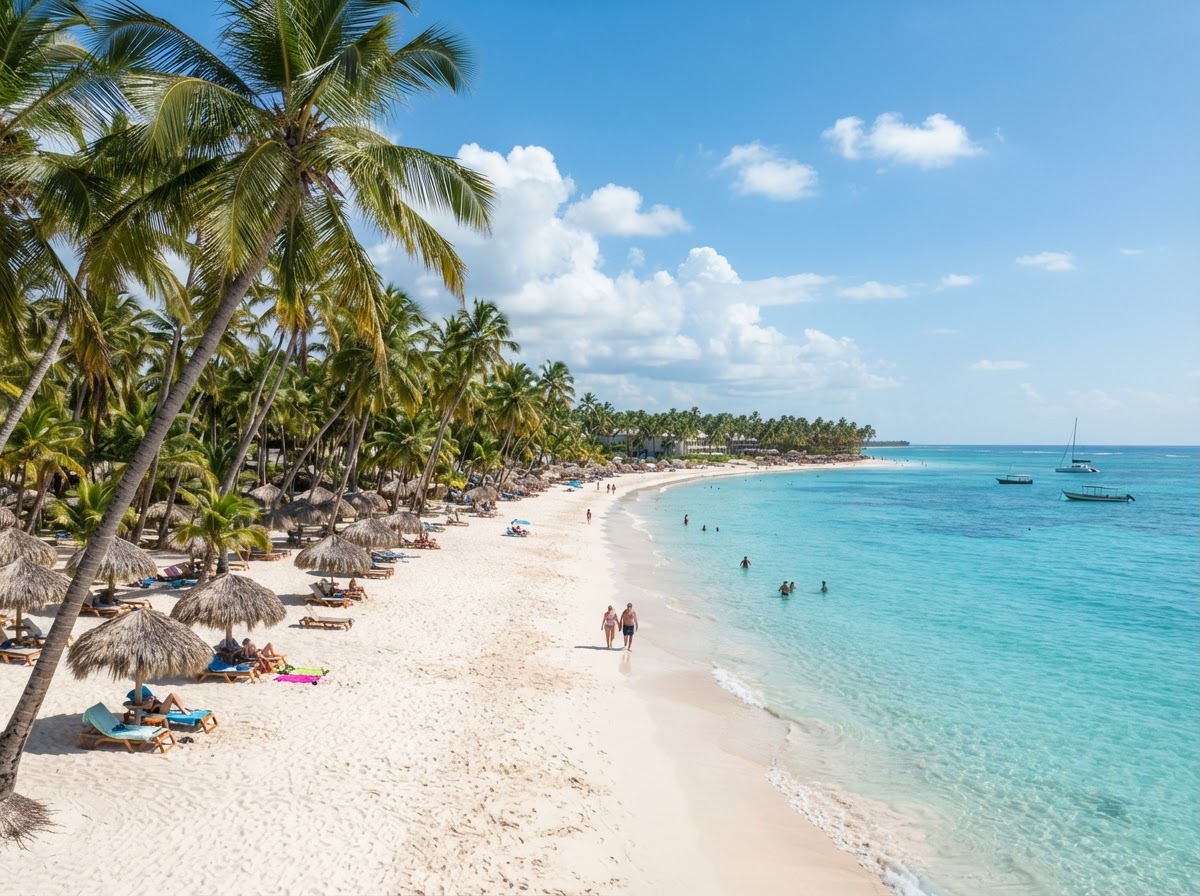
Punta Cana, on the east coast, is the resort capital — miles of white-sand beaches (Bavaro, Macao, Arena Gorda), the all-inclusive resorts and the golf courses. The beaches are the draw, with calm water, palm trees and the classic Caribbean look. The Indigenous Eyes Ecological Park, a reserve of freshwater pools in the forest, is the nature break. The Saona Island, a protected island with pristine beaches, is the popular day trip (by catamaran or speedboat). The Hoyo Azul, a cenote-like pool at the base of a cliff, is the swimming hole. Punta Cana is the easy, beach-focused base, and the resorts are self-contained worlds.
Santo Domingo and the colonial zone
Santo Domingo, the capital, has the Zona Colonial, the oldest colonial city in the Americas (founded 1496) and a UNESCO World Heritage site. The first cathedral, the first hospital, the first university and the first monastery of the Americas are here. The Calle Las Damas, the first paved street, the Alcazar de Colon (the Columbus palace) and the Cathedral of Santa Maria la Menor are the main sights. The Malecon, the waterfront promenade, is the modern city's gathering place. Santo Domingo is a living, working city, not just a museum, and the colonial zone is the atmospheric heart. It is the cultural counterpoint to the beach resorts.
The north coast — Cabarete and Las Galeras
The north coast, on the Atlantic, is the surf and adventure coast. Cabarete is the kite-surfing capital of the Caribbean, with the wind and the waves for the sport, and a lively, international, beach-bar scene. Puerto Plata, the main town, has the cable car to Mount Isabel de Torres, the amber museum and the Fortaleza San Felipe. Las Galeras, on the Samana Peninsula, is the quiet, wild end — the Playa Rincon (one of the best beaches in the Caribbean), the Hoyo Azul and the whale-watching (the humpbacks, in January-March, in Samana Bay). The north coast is the alternative to the east coast resorts — more independent, more adventurous.
The interior and Pico Duarte
The interior of the Dominican Republic is the mountainous, agricultural, less-visited heartland. Pico Duarte, at 3,098m the highest peak in the Caribbean, is the challenge — a 2-3 day hike (usually with mules for the gear) through the pine forests to the summit. Jarabacoa, the town near the peak, is the adventure base, with the white-water rafting on the Yaque del Norte and the waterfalls. Constanza, in the high valley, is the agricultural centre, with the flower farms and the cool climate. The interior is the Dominican Republic that most tourists never see, and it is the contrast to the coast. A 4x4 and a guide are the way to explore it.
Where to stay
Punta Cana and the east coast for the all-inclusive beach resorts. Santo Domingo for the history and the city. Cabarete for the kite-surf and the independent beach scene. Las Galeras and the Samana Peninsula for the quiet, wild beaches and the whales. Jarabacoa and Constanza for the interior and the adventure. Compare hotel options across booking platforms to find the right balance of location, price and style for your trip, and note that the all-inclusive resort is the dominant option on the east coast, but the smaller hotels and the guesthouses offer a more local experience elsewhere.
When to visit the Dominican Republic
The Dominican Republic has a tropical climate. The best time is the dry season, from December to April, when it is sunny and warm (28-30°C) — this is peak season. The wet season (May-November) is hotter, more humid and has heavy rains, with a hurricane risk from August to October; it is cheaper and less crowded. The water is warm year-round (27-29°C). The Dominican Republic is a year-round destination, but the dry season is the most comfortable. The whale season (January-March, in Samana Bay) is a special time. Avoid the major holidays (Christmas, Easter, the summer) if you dislike crowds and high prices.
Getting to the Dominican Republic
Punta Cana International Airport (PUJ) is the main airport for the resorts. Las Americas International Airport (SDQ), near Santo Domingo, serves the capital. Compare flights across providers — the Dominican Republic is well connected to the US, Canada, Europe and Latin America. A pre-booked private transfer is the most convenient option, especially to the resorts; compare transfer providers for fixed-price options. Taxis are available — agree the fare. Build in time for the journey, especially from Santo Domingo to Punta Cana, which can be 4 hours. The domestic flights (from Santo Domingo to Punta Cana or Samana) are the time-saver.
Getting around the Dominican Republic
The Dominican Republic's roads range from good highways to rough mountain roads. The guaguas (the shared minibuses) are the local option but can be crowded and indirect. The private taxis and the pre-booked transfers are the comfortable option. For the coast, the interior and the freedom to explore, compare car rental options — driving is on the right, and the roads can be busy and winding; a car gives you the freedom but requires confidence. The domestic flights are the time-saver for the long distances. Within the resorts, you walk or take a shuttle. The Dominican Republic is a place to take your time and explore.
Staying connected with an eSIM
The Dominican Republic has decent mobile data in the tourist areas and the main towns, though coverage in the interior and the mountains can be patchy. A travel eSIM is the easiest way to have data from the moment you land. Compare data-only eSIMs across providers, checking coverage in the areas you plan to visit, data allowances and validity. A single-country Dominican Republic plan is usually cheapest; a regional Caribbean plan is better value if you are island-hopping. Download offline maps for the interior. Remember that most travel eSIMs are data-only, so keep your home line active for SMS verification codes.
Muslim-friendly travel in the Dominican Republic
The Dominican Republic has a small Muslim community, and it is a reasonably Muslim-friendly country, though it requires some planning. Halal food is limited but available — a few restaurants in Santo Domingo and the resort areas offer halal options, and halal-finder apps are helpful. The Centro Islamico de la Republica Dominicana in Santo Domingo is the main mosque. Prayer facilities are limited outside the capital, so plan ahead. The Dominican Republic is tolerant and welcoming, and the resorts are accustomed to international visitors. With a little research, the Dominican Republic is a comfortable destination for Muslim travellers, though the halal options are fewer than in larger cities.
Protecting your trip
Travel insurance is recommended for the Dominican Republic — medical care is good in the resorts but limited in the interior, and the hurricane season (August-October) can disrupt travel. Compare policies and check what is included, particularly coverage for hurricane disruption and water sports. If your flight to or from the Dominican Republic is delayed, cancelled or overbooked, you may be entitled to compensation under applicable air passenger rights regulations; specialist services can check your eligibility and handle the claim with the airline on your behalf. Keep your boarding pass and booking reference until you are home.
Recommended Offers
Relevant offers for this trip. You'll be redirected to the partner to complete your booking.
Flights to Punta Cana
Check PriceTours & activities in Punta Cana
View DealsAttraction tickets in Punta Cana
View OfferExperiences & day tours in the Dominican Republic
View DealsCity passes & multi-attraction tickets
View PassesSelf-guided audio walks in Punta Cana
View OfferPunta Cana airport private transfer
Check PriceAirport transfer with English-speaking driver
View AvailabilityCompare airport transfer prices
Check PriceShared & private airport transfers
View Offerthe Dominican Republic eSIM data
View DealUnlimited the Dominican Republic data eSIM
View DealFlexible global data eSIM
View DealPrepaid the Dominican Republic data eSIM
View DealLuggage storage in Punta Cana
View DealCar rental comparison in the Dominican Republic
Check PriceCar rental across the Dominican Republic
Check PriceCar hire with price-drop protection
Check PriceCar hire with AutoEurope
Check PriceLocal car rental in the Dominican Republic
Check PriceScooter & motorbike rental
Check PriceFlight delay compensation check
Check EligibilityFlight compensation claim service
Check EligibilitySome links may be affiliate links. JalanDeals may earn a commission when you book through selected partners.
Frequently Asked Questions
How many days do I need in the Dominican Republic?
Five to seven days is a good first trip — enough for a beach resort, Santo Domingo and a day trip. Ten days lets you add the north coast and the interior.
When is the best time to visit the Dominican Republic?
December to April is the dry, sunny season (peak). May to November is the hot, wet season with a hurricane risk — cheaper but wet. The water is warm year-round.
How do I get from the airport to the resorts?
A pre-booked private transfer is easiest to the Punta Cana resorts. Taxis are available — agree the fare. From Santo Domingo, Punta Cana is 4 hours.
Is the Dominican Republic Muslim-friendly?
Reasonably so, with planning. Halal food is limited but available in Santo Domingo and the resorts, the main mosque is in the capital, and the country is tolerant. Use halal-finder apps.
Do I need a visa for the Dominican Republic?
The Dominican Republic requires a tourist card (included in airfare for many) for most nationalities — check the official Dominican immigration guidance for your passport before travel.
Which eSIM works in the Dominican Republic?
Compare data-only eSIMs from Airalo, Yesim, Drimsim and Saily that cover the Dominican Republic. Coverage in the interior can be patchy, so download offline maps.
Explore more
Related destination hubs and deal categories for this trip.
Affiliate disclosure: This article contains affiliate links. JalanDeals may earn a commission when you book through selected partners, at no additional cost to you. Prices and availability are set by the provider.