
In this article
- 1. Why Fiji is the South Pacific's favourite
- 2. The Mamanuca and Yasawa Islands
- 3. The Coral Coast and the mainland
- 4. Diving and snorkelling
- 5. Fijian culture and the kava ceremony
- 6. Where to stay
- 7. When to visit Fiji
- 8. Getting to Fiji
- 9. Getting around Fiji
- 10. Staying connected with an eSIM
- 11. Muslim-friendly travel in Fiji
- 12. Protecting your trip
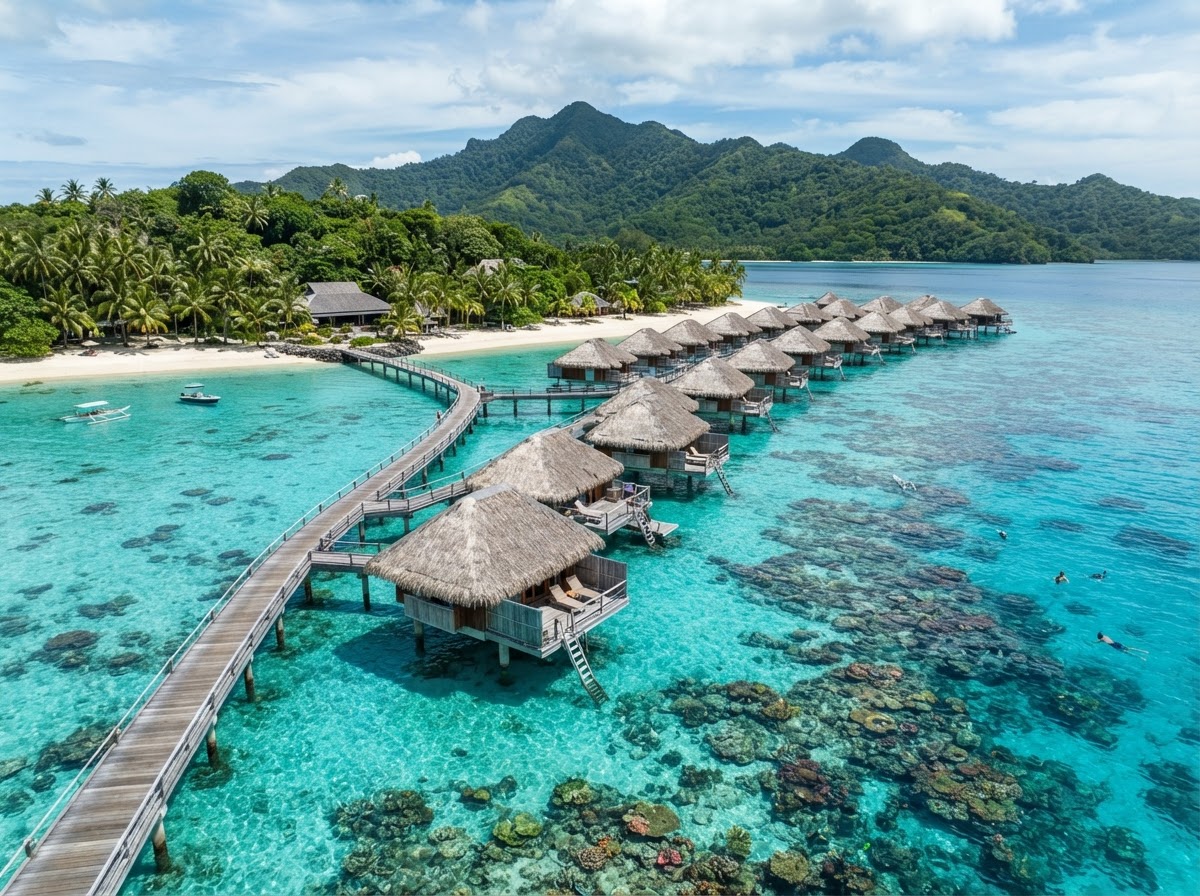
Fiji is the South Pacific at its most welcoming — 333 islands of white-sand beaches, coral reefs, rainforest-covered mountains and a people whose warmth is legendary. It is a place where the pace slows to island time, where the kava ceremony is a social ritual, and where the diving and snorkelling are among the best in the world. Whether you want a luxury overwater resort, a backpacker island or a family beach escape, Fiji delivers. This guide covers what to see, where to stay, when to go, how to get around, how to stay connected and how to compare current offers from multiple travel brands before completing your booking with a partner.
Why Fiji is the South Pacific's favourite
Fiji's appeal is simple: it is beautiful, warm and genuinely friendly. The Fijian people are famously hospitable — the greeting 'bula' is heard everywhere, and the welcome is real, not performed. The islands offer everything from luxury resorts to budget beach bures (traditional huts), the coral reefs are pristine, the water is warm and clear, and the cost is moderate by Pacific standards. It is also practical — English is widely spoken, the infrastructure is decent, and it is accessible from Australia, New Zealand, the US and Asia. Fiji is the easy tropical escape.
The Mamanuca and Yasawa Islands
The Mamanuca and Yasawa island groups, northwest of the main island, are the postcard Fiji — small islands with white-sand beaches, coral reefs and resorts ranging from budget to luxury. The Mamanucas are closer to Nadi and include the famous Castaway Island and the surfing mecca of Cloudbreak. The Yasawas, further north, are more remote and rugged, with the Sawa-i-Lau limestone caves, the Blue Lagoon and some of the best snorkelling in Fiji. Island-hopping by catamaran (the Yasawa Flyer) is the classic way to see them. Each island has its own character, and the snorkelling and diving are world-class.
The Coral Coast and the mainland
The Coral Coast, on the south of Viti Levu (the main island), is the resort strip, with a fringing reef, beaches and a range of hotels. It is the most accessible beach area from Nadi. The Sigatoka Sand Dunes National Park, nearby, is Fiji's first national park — a landscape of wind-blown dunes and archaeological sites. The inland Navua River, with its rainforest gorges and waterfalls, is reached by longboat. The capital, Suva, on the east coast, has the Fiji Museum, the municipal market and a more local, less touristy feel. The mainland is the practical base and has its own rewards.
Diving and snorkelling
Fiji is called the soft coral capital of the world, and the diving is exceptional. The Great Astrolabe Reef, off Kadavu island, is one of the largest barrier reefs in the world. The Bligh Water, between Viti Levu and Vanua Levu, has pelagic dives with sharks and manta rays. Beqa Lagoon, off the south coast, is famous for its shark dives. The snorkelling, from the beaches of the Mamanucas and Yasawas, is accessible to everyone — the coral gardens are shallow and the fish life is abundant. Compare dive and snorkel options across providers, and check the season, as visibility varies.
Fijian culture and the kava ceremony
Fijian culture is the heart of the experience. The kava ceremony (sevusevu), in which the mildly sedative yaqona root is mixed and shared from a communal bowl, is the social ritual of Fiji — you will be invited to participate in villages and resorts. Village visits, with a guide, show the traditional way of life, the thatched bures and the meke (dance) performances. The fire-walking ceremony, on Beqa island, is a traditional test of endurance. Sunday church, with the soaring Fijian harmonies, is a moving experience. Respect the customs — dress modestly in villages, remove your hat and sunglasses, and bring kava as a gift if visiting a village.
Where to stay
The Mamanucas and Yasawas for the island resort experience, from budget beach bures to luxury overwater villas. The Coral Coast for accessible beach resorts near Nadi. Denarau Island, near Nadi, is the mainland resort enclave with marina and golf. Suva for a city experience. Savusavu, on Vanua Levu, for a hidden, hot-springs-and-diving escape. Compare hotel options across booking platforms to find the right balance of location, price and style for your trip, and note that the islands are spread out, so choose by what you most want — luxury, diving, budget or remoteness.
When to visit Fiji
Fiji has a tropical climate. The best time is the dry season, from May to October, when it is sunny, less humid and cooler (25-28°C) — this is peak season. The wet season (November-April) is hotter, more humid and has heavy rains, with a cyclone risk from November to April; it is cheaper and greener. The water is warm year-round (26-28°C). Fiji is a year-round destination, but the dry season is the most comfortable. School holidays (especially the Australian and New Zealand winter holidays) are the busiest times, so book early.
Getting to Fiji
Nadi International Airport (NAN), on the west of Viti Levu, is the main airport and the gateway to the islands. Compare flights across providers — Fiji is well connected to Australia, New Zealand, the US, Hong Kong and Singapore. The airport is near Denarau and the Coral Coast. A pre-booked private transfer is the most convenient option to your resort; compare transfer providers for fixed-price options. To the islands, the Yasawa Flyer catamaran, seaplane or helicopter transfers depart from Port Denarau. Build in time for the island transfer, which can be a few hours.
Getting around Fiji
On the mainland, buses, taxis and rental cars cover the main routes — compare car rental options if you want to explore independently; driving is on the left. To the islands, the Yasawa Flyer catamaran is the scheduled service, and seaplanes and helicopters are the fast option. Resort boats serve the closer islands. Within the islands, you walk, swim or take a resort boat. Fiji is not a place to rush — the transfers are part of the experience, and island time is the point. Plan your itinerary to minimise backtracking.
Staying connected with an eSIM
Fiji has decent mobile data on the main islands, though coverage on the remote islands can be patchy. A travel eSIM is the easiest way to have data from the moment you land. Compare data-only eSIMs across providers, checking coverage in the areas you plan to visit, data allowances and validity. A single-country Fiji plan is usually cheapest. Many resorts offer wifi, but it can be slow and expensive. Download offline maps for the islands. Remember that most travel eSIMs are data-only, so keep your home line active for SMS verification codes.
Muslim-friendly travel in Fiji
Fiji has a significant Muslim community — about 7% of the population, mostly of South Asian descent — and it is a Muslim-friendly destination. Halal food is available, particularly in the Indian-Fijian communities around Nadi, Lautoka and Suva, and halal-finder apps are helpful. Mosques are found in the main towns — the Nadi Mosque and the Lautoka Mosque are the main ones. Prayer facilities are limited outside the main towns, so plan ahead. The Fijian people are tolerant and welcoming of all faiths. With a little research, Fiji is a comfortable destination for Muslim travellers.
Protecting your trip
Travel insurance is strongly recommended for Fiji — medical care is limited outside the main centres, and serious cases may require evacuation to Australia or New Zealand. Compare policies and check what is included, particularly coverage for diving, water sports and medical evacuation. If your flight to or from Fiji is delayed, cancelled or overbooked, you may be entitled to compensation under applicable air passenger rights regulations; specialist services can check your eligibility and handle the claim with the airline on your behalf. Keep your boarding pass and booking reference until you are home.
Recommended Offers
Relevant offers for this trip. You'll be redirected to the partner to complete your booking.
Flights to Fiji
Check PriceTours & activities in Fiji
View DealsAttraction tickets in Fiji
View OfferExperiences & day tours in Fiji
View DealsCity passes & multi-attraction tickets
View PassesSelf-guided audio walks in Fiji
View OfferFiji airport private transfer
Check PriceAirport transfer with English-speaking driver
View AvailabilityCompare airport transfer prices
Check PriceShared & private airport transfers
View OfferFiji eSIM data
View DealUnlimited Fiji data eSIM
View DealFlexible global data eSIM
View DealPrepaid Fiji data eSIM
View DealLuggage storage in Fiji
View DealCar rental comparison in Fiji
Check PriceCar rental across Fiji
Check PriceCar hire with price-drop protection
Check PriceCar hire with AutoEurope
Check PriceLocal car rental in Fiji
Check PriceScooter & motorbike rental
Check PriceFlight delay compensation check
Check EligibilityFlight compensation claim service
Check EligibilitySome links may be affiliate links. JalanDeals may earn a commission when you book through selected partners.
Frequently Asked Questions
How many days do I need in Fiji?
Five to seven days is a good first trip — enough for an island resort, the Coral Coast and some diving. Ten days lets you island-hop the Yasawas.
When is the best time to visit Fiji?
May to October is the dry, cooler season (peak). November to April is the hot, wet season with a cyclone risk — cheaper but rainy. The water is warm year-round.
How do I get from Fiji airport to the islands?
From Nadi, the Yasawa Flyer catamaran, seaplane or helicopter departs from Port Denarau. A pre-booked private transfer takes you to the Coral Coast resorts.
Is Fiji Muslim-friendly?
Yes. Fiji has a significant Muslim community, halal food is available in Nadi, Lautoka and Suva, and mosques are in the main towns. Use halal-finder apps.
Do I need a visa for Fiji?
Fiji offers visa-free entry to many nationalities for stays up to 4 months — check the official Fiji immigration guidance for your passport before travel.
Which eSIM works in Fiji?
Compare data-only eSIMs from Airalo, Yesim, Drimsim and Saily that cover Fiji. Coverage on remote islands can be patchy, so download offline maps.
Explore more
Related destination hubs and deal categories for this trip.
Destinations
Affiliate disclosure: This article contains affiliate links. JalanDeals may earn a commission when you book through selected partners, at no additional cost to you. Prices and availability are set by the provider.