
In this article
- 1. Why Istanbul is unlike anywhere else
- 2. Sultanahmet — the historic heart
- 3. The Grand Bazaar and the Spice Bazaar
- 4. The Bosphorus
- 5. The food — from street to palace
- 6. Galata, Karaköy and the Asian side
- 7. Where to stay
- 8. When to visit Istanbul
- 9. Getting to Istanbul
- 10. Getting around Istanbul
- 11. Staying connected with an eSIM
- 12. Muslim-friendly travel in Istanbul
- 13. Protecting your trip
- 14. Beyond Istanbul
Istanbul is the only major city in the world that straddles two continents, and that geography has shaped everything about it. For 2,500 years it has been a capital — of the Byzantine and Ottoman empires among others — and the layers are visible everywhere: Roman cisterns beneath Ottoman mosques, Byzantine mosaics inside converted grand mosques, and a modern metropolis of 15 million people humming above it all. It is a city of bazaars, ferries, street food, tea gardens and some of the most spectacular architecture on earth. This guide covers what to see, where to stay, when to go, how to get around, how to stay connected and how to compare current offers from multiple travel brands before completing your booking with a partner.
Why Istanbul is unlike anywhere else
Istanbul's uniqueness comes from being a crossroads for so long. It has been Greek, Roman, Byzantine and Ottoman, and each layer remains. The city is split by the Bosphorus, the strait that separates Europe from Asia, and the two halves have different characters — the historic European side with its monuments and bazaars, and the more residential Asian side with its quieter neighbourhoods and waterfront cafes. The call to prayer echoes across the water, ferries criss-cross day and night, and the food draws from the entire Ottoman world. It is a city that rewards walking, eating and ferry-riding.
Sultanahmet — the historic heart
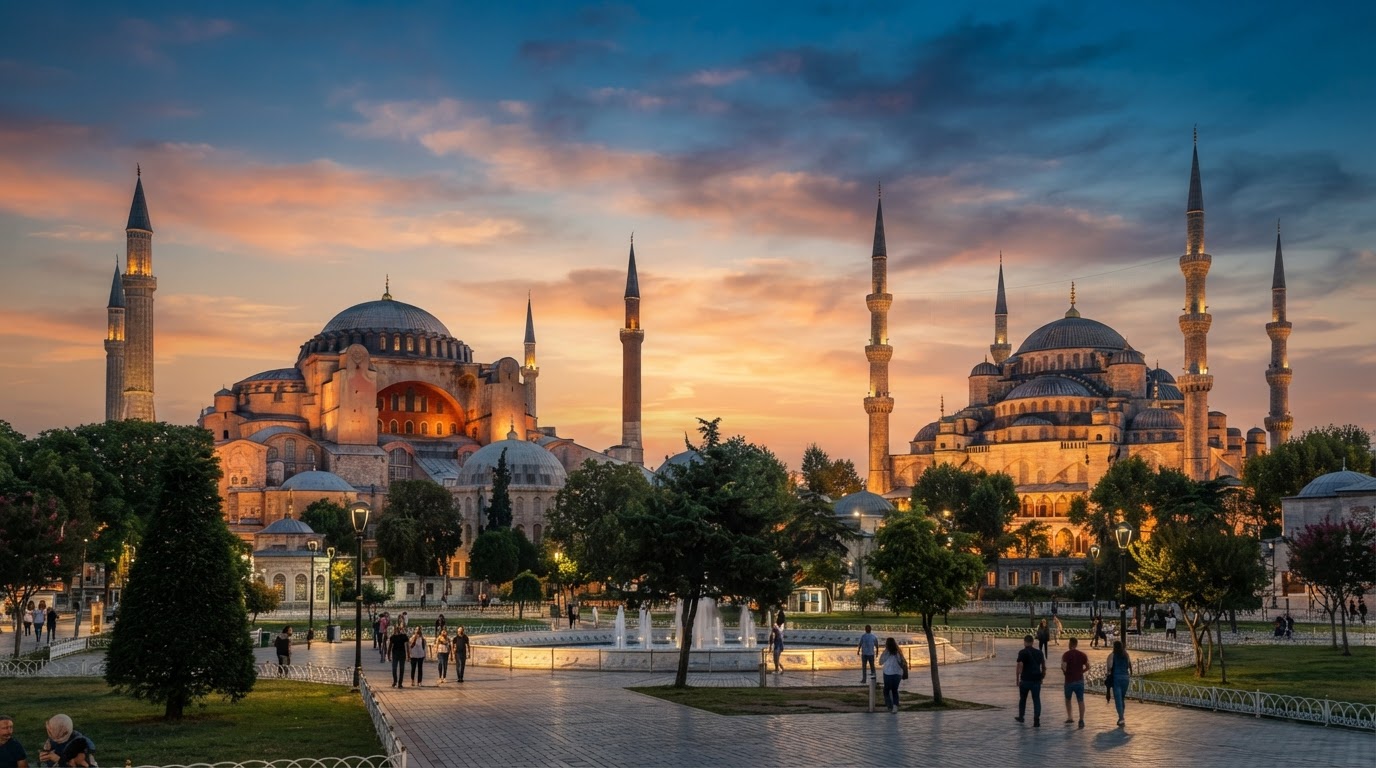
Sultanahmet is the historic core where the great monuments cluster. Hagia Sophia, built in 537 as a Byzantine cathedral, converted to a mosque, then a museum, and now a mosque again, is one of the most extraordinary buildings in the world — its vast dome and gold mosaics are breathtaking. The Blue Mosque (Sultan Ahmed Mosque) opposite, with its six minarets and blue Iznik tiles, is its Ottoman counterpart. The Basilica Cistern, a vast underground Roman water reservoir with 336 columns, is atmospheric and cool. Topkapi Palace, the seat of the Ottoman sultans for 400 years, holds the imperial collections and the Harem. All are within walking distance of each other — give this area at least a full day.
The Grand Bazaar and the Spice Bazaar
The Grand Bazaar (Kapalıçarşı) is one of the oldest and largest covered markets in the world, with over 4,000 shops on 60 streets. It is a city within a city — gold, carpets, leather, ceramics, lamps and jewellery. Bargaining is expected and part of the fun; start at around half the asking price and meet in the middle. The nearby Spice Bazaar (Mısır Çarşısı) is more compact and fragrant, piled with saffron, sumac, Turkish delight and teas. For a more local market, head to the Kadınlar Pazarı (Women's Market) or the bookshops around Sahaflar. Take a break in a historic coffee house or a tea garden.
The Bosphorus
The Bosphorus is the soul of Istanbul, and a ferry ride along it is the essential experience. The public ferries from Eminönü run up the strait to villages like Ortaköy, Bebek and Anadolu Kavağı, passing Ottoman palaces (Dolmabahçe and Beylerbeyi), fortresses (Rumeli Hisarı) and the wooden yalı waterside mansions. A full Bosphorus cruise to the Black Sea and back takes most of a day and is wonderful value. The shorter commuter ferries between the European and Asian sides (Eminönü to Kadıköy, Karaköy to Haydarpaşa) are a daily ritual for locals and the best cheap sightseeing in the city. Time a ferry for sunset for the most magical light.
The food — from street to palace
Istanbul is one of the great food cities. Street food is everywhere and excellent: simit (sesame bread rings), balık ekmek (grilled fish sandwich by the Galata Bridge), midye dolma (stuffed mussels) and kumpir (loaded baked potatoes) in Ortaköy. For a sit-down meal, try a meze spread with raki in a meyhane, a kebab house for Adana or Iskender, and a lokanta for home-style Turkish cooking. Turkish breakfast (kahvaltı) is a glorious spread of cheeses, olives, honey, clotted cream, eggs and bread — devote a morning to it. Turkish delight (lokum) and baklava are the sweets. Tea (çay) is served everywhere and constantly; accept it when offered in a shop.
Galata, Karaköy and the Asian side
Across the Galata Bridge from the old city, Galata and Karaköy are the trendy, younger districts. Galata Tower offers the best panoramic view of the city. The streets around it are full of cafes, vintage shops and galleries. Istiklal Avenue runs from Taksim Square down to Tünel, a bustling pedestrian street of shops, embassies and historic tram lines. Karaköy has become the specialty-coffee and design district. For a different pace, take the ferry to Kadıköy on the Asian side — its Moda neighbourhood is full of cafes, bookshops and a more local, relaxed atmosphere than the European side. The Asian side is where many Istanbulites actually live.
Where to stay
Sultanahmet is the most convenient base for first-time visitors — walkable to the main monuments, with many hotels in restored Ottoman houses. Beyoğlu (Galata/Karaköy/Taksim) is the modern, lively district with better nightlife and dining. Karaköy is a good compromise between the two. The Asian side (Kadıköy/Moda) is quieter and more local. Compare hotel options across booking platforms to find the right balance of location, price and style for your trip, and note that Istanbul is hilly, so consider the walk to your hotel from the nearest transport.
When to visit Istanbul
The best times are spring (April to June) and autumn (September to November), when the weather is mild and the city is at its most beautiful. Summer (July-August) is hot and humid and very crowded with tourists. Winter (December to February) is cold, wet and sometimes snowy, but the crowds are gone and the museums are quiet — and snow on the domes is magical. Avoid the major Turkish holiday periods if you dislike crowds: the Eid holidays (Ramadan Bayramı and Kurban Bayramı, dates vary) see domestic travel surge. Whenever you go, pack layers — the city can be warm by day and cool by night.
Getting to Istanbul
Istanbul has two airports: Istanbul Airport (IST) on the European side, the main international hub, and Sabiha Gökçen (SAW) on the Asian side, used by low-cost carriers. Compare flights across providers and check which airport you arrive at, as they are far apart. The new Istanbul Airport is about 50km from the old city; the metro now connects it, or a pre-booked private transfer is the most convenient option. Compare transfer providers for fixed-price meet-and-greet services. Sabiha Gökçen is on the Asian side; allow plenty of time for the cross-city transfer. Taxis are available but agree the fare or ensure the meter is used.
Getting around Istanbul
Istanbul's transport is extensive and affordable. The tram (T1) connects the main sights on the European side. The metro connects the airports and the newer districts. The ferries are both transport and sightseeing. The funicular and the historic tram add character. Buy an Istanbulkart and load it with credit to use on all public transport. Ride-hailing apps work. Traffic can be very heavy, so the tram and ferry are often faster than taxis. Walking is the best way to see the historic areas, but the hills are steep — wear comfortable shoes.
Staying connected with an eSIM
Türkiye has good, affordable mobile data, and a travel eSIM is the easiest way to have it from the moment you land. Compare data-only eSIMs across providers, checking coverage (the city is well covered, but signal can be patchy in some older buildings and tunnels), data allowances and validity. A single-country Türkiye plan is usually cheapest; a regional plan is better value if you are combining Istanbul with neighbouring countries. Remember that most travel eSIMs are data-only, so keep your home line active for SMS verification codes.
Muslim-friendly travel in Istanbul
Istanbul is one of the most Muslim-friendly cities in the world. Türkiye is a Muslim-majority country, halal food is the norm (though alcohol is widely available in tourist areas), and mosques are everywhere — many welcome respectful non-Muslim visitors outside prayer times. Prayer facilities are available at airports, malls and most large hotels. During Ramadan, the city adapts: daytime eating in public is limited but tourist restaurants continue to serve, and the iftar meal after sunset is a wonderful communal experience. Dress modestly when visiting mosques (women should cover their hair; scarves are usually provided). Istanbul is safe, family-friendly and welcoming.
Protecting your trip
Travel insurance is recommended for Türkiye — medical care at private hospitals is good but can be expensive. Compare policies and check what is included. If your flight to or from Istanbul is delayed, cancelled or overbooked, you may be entitled to compensation under applicable air passenger rights regulations (especially for flights from the EU/UK); specialist services can check your eligibility and handle the claim with the airline on your behalf. Keep your boarding pass and booking reference until you are home.
Beyond Istanbul
Istanbul is a great base for the rest of Türkiye. Cappadocia, with its fairy chimneys and hot-air balloons, is a short flight or overnight bus away and is one of the country's unmissable sights. The Aegean and Mediterranean coasts (Ephesus, Antalya, Bodrum) offer ruins and beaches. Pamukkale's travertine terraces are a day trip from the coast. Compare flights, transfers and hotels across providers to build the route that works for your dates and budget.
Recommended Offers
Relevant offers for this trip. You'll be redirected to the partner to complete your booking.
Flights to Istanbul
Check PriceTours & activities in Istanbul
View DealsAttraction tickets in Istanbul
View OfferExperiences & day tours in Türkiye
View DealsCity passes & multi-attraction tickets
View PassesSelf-guided audio walks in Istanbul
View OfferIstanbul airport private transfer
Check PriceAirport transfer with English-speaking driver
View AvailabilityCompare airport transfer prices
Check PriceShared & private airport transfers
View OfferTürkiye eSIM data
View DealUnlimited Türkiye data eSIM
View DealFlexible global data eSIM
View DealPrepaid Türkiye data eSIM
View DealLuggage storage in Istanbul
View DealCar rental comparison in Türkiye
Check PriceCar rental across Türkiye
Check PriceCar hire with price-drop protection
Check PriceCar hire with AutoEurope
Check PriceLocal car rental in Türkiye
Check PriceScooter & motorbike rental
Check PriceFlight delay compensation check
Check EligibilityFlight compensation claim service
Check EligibilitySome links may be affiliate links. JalanDeals may earn a commission when you book through selected partners.
Frequently Asked Questions
How many days do I need in Istanbul?
Three to four days is enough for Sultanahmet, the bazaars, a Bosphorus cruise and the Asian side. Add a day for Cappadocia if you fly.
When is the best time to visit Istanbul?
Spring (April-June) and autumn (September-November) are mild and beautiful. Summer is hot and crowded; winter is cold but quiet. Avoid the Eid holidays if you dislike crowds.
Which Istanbul airport should I fly into?
Istanbul Airport (IST) on the European side is the main hub. Sabiha Gökçen (SAW) on the Asian side is used by low-cost carriers. Check which one, as they are far apart.
Is Istanbul Muslim-friendly?
Very. Türkiye is Muslim-majority, halal food is the norm, mosques welcome respectful visitors, and prayer facilities are everywhere. Ramadan is a special time to visit.
Do I need a visa for Türkiye?
Türkiye requires an e-visa or visa for many nationalities — check the official Turkish immigration portal for your passport before travel.
Which eSIM works in Türkiye?
Compare data-only eSIMs from Airalo, Yesim, Drimsim and Saily that cover Türkiye. A single-country plan is cheapest; a regional plan is better if you are combining Türkiye with neighbouring countries.
Explore more
Related destination hubs and deal categories for this trip.
Affiliate disclosure: This article contains affiliate links. JalanDeals may earn a commission when you book through selected partners, at no additional cost to you. Prices and availability are set by the provider.