
In this article
- 1. Why Jamaica is the soul of the Caribbean
- 2. Negril and the west coast
- 3. Ocho Rios and the north coast
- 4. The Blue Mountains and the interior
- 5. The food — jerk, ackee and rum
- 6. Where to stay
- 7. When to visit Jamaica
- 8. Getting to Jamaica
- 9. Getting around Jamaica
- 10. Staying connected with an eSIM
- 11. Muslim-friendly travel in Jamaica
- 12. Protecting your trip
Jamaica is the soul of the Caribbean — a mountainous island of reggae, jerk chicken, waterfalls and some of the most beautiful beaches in the region, with a culture that has influenced the world far beyond its size. It is a place where the rhythm is in everything, where the Blue Mountains rise behind the coast, and where the resorts, the waterfalls and the music are all part of the experience. This guide covers what to see, where to stay, when to go, how to get around, how to stay connected and how to compare current offers from multiple travel brands before completing your booking with a partner.
Why Jamaica is the soul of the Caribbean
Jamaica's appeal is its culture and its landscape. The music — reggae, the sound of Bob Marley, the sound of dancehall — is the island's gift to the world, and it is everywhere. The food — the jerk chicken, the ackee and saltfish, the curried goat — is distinctive and delicious. The landscape is mountainous and green, with the Blue Mountains rising to 2,256m, and the coast has white-sand beaches, cliffs and waterfalls. The people are warm, direct and proud. It is also a practical Caribbean destination, with good resorts, direct flights and a range of experiences from the all-inclusive to the independent. Jamaica is the Caribbean with a personality.
Negril and the west coast
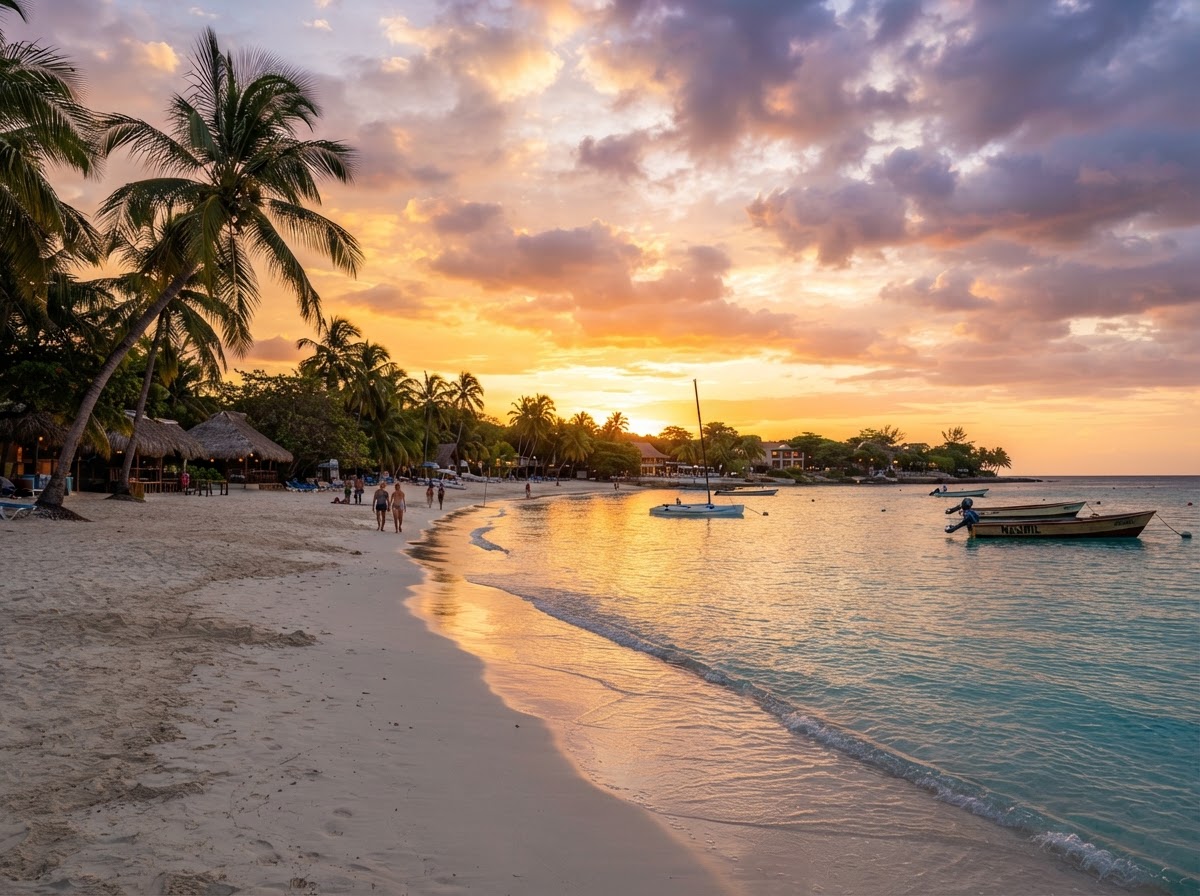
Negril, on the far west, is the beach and cliff destination — the Seven Mile Beach (actually about 4 miles) is one of the best in the Caribbean, with white sand and calm water. The Negril Cliffs, on the west end, have the cliff-jumping spots (Rick's Cafe is the famous one) and the sunset. Negril is the laid-back, beach-and-sunset base. The west coast, north of Negril, has the Montego Bay (the main resort area, with the airport) and the smaller, quieter beaches. The west coast is the most developed and the most popular, with the range of resorts and the easiest access.
Ocho Rios and the north coast
Ocho Rios, on the north coast, is the cruise port and the waterfall destination. Dunn's River Falls, the famous terraced waterfall that you can climb (in a human chain, with a guide), is the iconic sight. The Blue Hole, a series of swimming holes and waterfalls in the rainforest, is the more adventurous alternative. Mystic Mountain, the rainforest adventure park, has the bobsled ride, the zip-line and the sky explorer. The Ocho Rios area is the adventure and nature base. The north coast, east of Ocho Rios, has Port Antonio, the quieter, more local, more beautiful end of the coast, with the Blue Lagoon and the Reach Falls.
The Blue Mountains and the interior
The Blue Mountains, behind Kingston, are the coffee-growing, hiking, cooler-temperature interior. The Blue Mountain coffee, one of the most expensive coffees in the world, is grown on the slopes. The hike to the peak (Blue Mountain Peak, 2,256m) for the sunrise is the classic hike, usually done as an overnight. The coffee farms (the Old Tavern, the Craighton) offer tours and tastings. The mountains are a contrast to the coast — cooler, greener, quieter — and they are the source of the island's water. Kingston, the capital, at the foot of the mountains, has the Bob Marley Museum and the reggae scene, though it is more of a city than a tourist destination.
The food — jerk, ackee and rum
Jamaican food is distinctive and excellent. The jerk chicken and the jerk pork, seasoned with the jerk spice (scotch bonnet, allspice, thyme) and smoked over pimento wood, is the national dish — try it at a roadside jerk stand (Boston Jerk near Port Antonio is the original). The ackee and saltfish (the national dish, made with the ackee fruit and the salted cod) is the breakfast. The curried goat, the rice and peas, the festival (the fried bread) are the classics. The rum (Appleton, from the south coast) is the spirit. The fruit (the mangoes, the soursop, the guinep) is the abundance. Eating in Jamaica is a highlight.
Where to stay
Montego Bay is the main resort area, near the airport, with the all-inclusive resorts. Negril is the beach-and-cliff base, with a range from budget to luxury. Ocho Rios is the cruise port and the waterfall base. Port Antonio is the quiet, local, beautiful alternative. Kingston is the city and the music base. The Blue Mountains have the guesthouses and the coffee farms. Compare hotel options across booking platforms to find the right balance of location, price and style for your trip, and note that the all-inclusive resort is the dominant option, but the independent guesthouses and the smaller hotels offer a more local experience.
When to visit Jamaica
Jamaica has a tropical climate. The best time is the dry season, from December to April, when it is sunny and warm (28-30°C) — this is peak season. The wet season (May-November) is hotter, more humid and has heavy rains, with a hurricane risk from August to October; it is cheaper and less crowded. The water is warm year-round (27-29°C). Jamaica is a year-round destination, but the dry season is the most comfortable. Avoid the major holidays (Christmas, Easter, Reggae Sumfest in July) if you dislike crowds and high prices. The winter is the most popular time, so book early.
Getting to Jamaica
Sangster International Airport (MBJ), in Montego Bay, is the main airport for the tourist coast. Norman Manley International Airport (KIN), in Kingston, serves the capital and the east. Compare flights across providers — Jamaica is well connected to the US, Canada and Europe. A pre-booked private transfer is the most convenient option, especially to the resorts; compare transfer providers for fixed-price options. Taxis are available — agree the fare or use the meter (the JUTA taxis are the official ones). Build in time for the journey, especially from Kingston to the north coast, which can be 3 hours.
Getting around Jamaica
Jamaica's roads range from good highways to rough mountain roads. The route taxis (the shared taxis, the red plates) are the local option but can be crowded and indirect. The private taxis and the pre-booked transfers are the comfortable option. For the coast, the mountains and the freedom to explore, compare car rental options — driving is on the left, and the roads can be winding and busy; a car gives you the freedom but requires confidence. The Knutsford Express is the comfortable, air-conditioned bus between the main towns. Within the resorts, you walk or take a shuttle. Jamaica is a place to take your time.
Staying connected with an eSIM
Jamaica has decent mobile data in the tourist areas and the main towns, though coverage in the Blue Mountains and the remote areas can be patchy. A travel eSIM is the easiest way to have data from the moment you land. Compare data-only eSIMs across providers, checking coverage in the areas you plan to visit, data allowances and validity. A single-country Jamaica plan is usually cheapest; a regional Caribbean plan is better value if you are island-hopping. Download offline maps for the mountains. Remember that most travel eSIMs are data-only, so keep your home line active for SMS verification codes.
Muslim-friendly travel in Jamaica
Jamaica has a small but established Muslim community, with a history dating to the West African and the Indian indentured labourers, and it is a reasonably Muslim-friendly country. Halal food is limited but available — a few restaurants in Kingston and the tourist areas offer halal options, and halal-finder apps are helpful. The Islamic Council of Jamaica and the mosques in Kingston serve the community. Prayer facilities are limited outside the main towns, so plan ahead. Jamaica is tolerant and welcoming, and the Rastafarian tradition, with its dietary laws (ital food, the vegetarian cuisine), offers a halal-adjacent option. With a little research, Jamaica is a comfortable destination for Muslim travellers.
Protecting your trip
Travel insurance is recommended for Jamaica — medical care is good in the resorts but limited in the interior, and the hurricane season (August-October) can disrupt travel. Compare policies and check what is included, particularly coverage for hurricane disruption and water sports. If your flight to or from Jamaica is delayed, cancelled or overbooked, you may be entitled to compensation under applicable air passenger rights regulations; specialist services can check your eligibility and handle the claim with the airline on your behalf. Keep your boarding pass and booking reference until you are home.
Recommended Offers
Relevant offers for this trip. You'll be redirected to the partner to complete your booking.
Flights to Jamaica
Check PriceTours & activities in Jamaica
View DealsAttraction tickets in Jamaica
View OfferExperiences & day tours in Jamaica
View DealsCity passes & multi-attraction tickets
View PassesSelf-guided audio walks in Jamaica
View OfferJamaica airport private transfer
Check PriceAirport transfer with English-speaking driver
View AvailabilityCompare airport transfer prices
Check PriceShared & private airport transfers
View OfferJamaica eSIM data
View DealUnlimited Jamaica data eSIM
View DealFlexible global data eSIM
View DealPrepaid Jamaica data eSIM
View DealLuggage storage in Jamaica
View DealCar rental comparison in Jamaica
Check PriceCar rental across Jamaica
Check PriceCar hire with price-drop protection
Check PriceCar hire with AutoEurope
Check PriceLocal car rental in Jamaica
Check PriceScooter & motorbike rental
Check PriceFlight delay compensation check
Check EligibilityFlight compensation claim service
Check EligibilitySome links may be affiliate links. JalanDeals may earn a commission when you book through selected partners.
Frequently Asked Questions
How many days do I need in Jamaica?
Five to seven days is a good first trip — enough for a beach, a waterfall, the Blue Mountains and some reggae. Ten days lets you add Port Antonio and the east.
When is the best time to visit Jamaica?
December to April is the dry, sunny season (peak). May to November is the hot, wet season with a hurricane risk — cheaper but wet. The water is warm year-round.
How do I get from Jamaica airport to the resorts?
A pre-booked private transfer is easiest to the Montego Bay resorts. Taxis are available — agree the fare or use the meter. From Kingston, the north coast is 3 hours.
Is Jamaica Muslim-friendly?
Reasonably so. Jamaica has a small Muslim community, halal food is available in Kingston and the tourist areas, and the Rastafarian ital food is halal-adjacent. Use halal-finder apps.
Do I need a visa for Jamaica?
Jamaica offers visa-free entry to many nationalities for stays up to 90 days — check the official Jamaican immigration guidance for your passport before travel.
Which eSIM works in Jamaica?
Compare data-only eSIMs from Airalo, Yesim, Drimsim and Saily that cover Jamaica. Coverage in the Blue Mountains and remote areas can be patchy, so download offline maps.
Explore more
Related destination hubs and deal categories for this trip.
Affiliate disclosure: This article contains affiliate links. JalanDeals may earn a commission when you book through selected partners, at no additional cost to you. Prices and availability are set by the provider.