
In this article
- 1. Why China is a worthwhile Muslim-friendly destination
- 2. Beijing: the Niujie Mosque and the capital
- 3. Xi'an: the Muslim Quarter and the Great Mosque
- 4. The northwest: Uyghur culture and the Silk Road
- 5. Shanghai and Guangzhou: the modern cities
- 6. Finding halal food across China
- 7. Prayer facilities and mosques
- 8. When to visit China
- 9. Getting to and around China
- 10. Staying connected with an eSIM
- 11. Muslim-friendly tips for China
- 12. Protecting your trip
China is home to roughly 20 million Muslims and a deep Islamic heritage that stretches back over a thousand years along the Silk Road. While China is not a Muslim-majority country, Muslim travellers will find historic mosques, established halal food traditions — especially among the Hui and Uyghur communities — and a growing layer of halal-certified restaurants in the major cities. With a little planning, China is a rewarding and increasingly accessible destination for Muslim visitors. This guide covers the best Muslim-friendly cities, where to find halal food and prayer facilities, when to go, how to get around, how to stay connected and how to compare current offers from multiple travel brands before completing your booking with a partner.
Why China is a worthwhile Muslim-friendly destination
China's Muslim heritage is older than many people realise. Arab and Persian traders reached the Silk Road cities as early as the 7th century, and the Hui Muslim community descends from those settlers and their Chinese converts. The result is a network of centuries-old mosques that blend Chinese and Islamic architecture — the Niujie Mosque in Beijing (founded in 996), the Great Mosque of Xi'an (built in 742) and the Id Kah Mosque in Kashgar are striking examples. Halal food is an established part of Chinese cuisine, not a recent import: hand-pulled lamian noodles, cumin-spiced lamb skewers and Uyghur flatbread are everyday street food in the northwest. With halal-finder apps and a travel eSIM, Muslim travellers can move through China with growing confidence.
Beijing: the Niujie Mosque and the capital
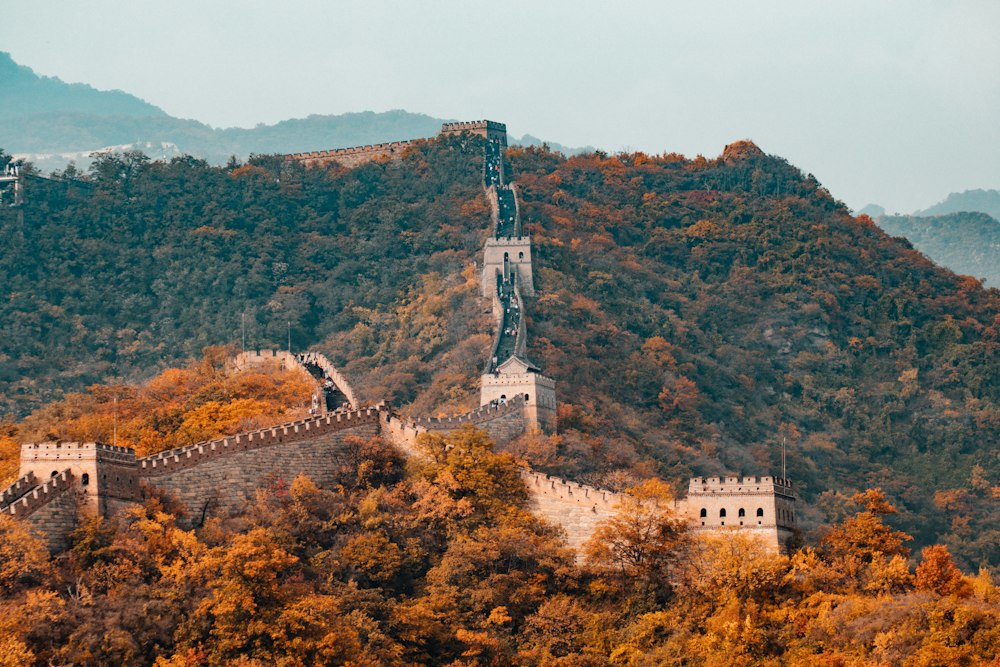
Beijing's Niujie Mosque, in the Xuanwu district, is the oldest and largest mosque in the city and the heart of the capital's Muslim community. The surrounding Niujie street is lined with halal butchers, bakeries and restaurants serving Beijing-style halal food — try the halal lamb hotpot and the sesame flatbread. The mosque itself looks like a traditional Chinese temple from the outside, with a green-tiled roof and a hexagonal pavilion, but inside holds the mihrab and a minaret. Prayer facilities are available, and the area is welcoming to visitors. Beijing's other great sights — the Forbidden City, the Great Wall and the Temple of Heaven — are all easily combined with a visit to Niujie. Use halal-finder apps to locate the growing number of halal restaurants around the city centre and near tourist areas.
Xi'an: the Muslim Quarter and the Great Mosque
Xi'an is the spiritual heart of Chinese Islam and arguably the most Muslim-friendly city in China for travellers. The Great Mosque of Xi'an, founded in 742, is one of the oldest and largest mosques in the country — a serene complex of gardens, pavilions and archways built in Chinese style, with no minaret and a prayer hall facing Makkah. The Muslim Quarter, the streets around the mosque, is one of the great street-food destinations in China. Halal food is everywhere: cumin lamb skewers, roujiamo (a halal meat flatbread sandwich), hand-pulled biangbiang noodles, pita with mutton soup and persimmon cakes. The food is the draw, and it is authentically halal. Xi'an is also the gateway to the Terracotta Army. For Muslim travellers, Xi'an is the easiest and most rewarding city in China.
The northwest: Uyghur culture and the Silk Road
Northwest China — Xinjiang, Gansu and Ningxia — is home to the Uyghur Muslim community and the Hui Muslim heartland. Kashgar, in far western Xinjiang, has the Id Kah Mosque, the largest in China, and the Old City with its Uyghur bazaars, tea houses and halal food. Urumqi and Turpan offer Silk Road history and desert landscapes. Lanzhou, in Gansu, is famous for its halal beef lamian noodles. Yinchuan, the capital of the Ningxia Hui Autonomous Region, is the centre of Hui Muslim culture, with mosques and halal cuisine. The northwest is where Islamic heritage is most visible and halal food is the default. Note that travel to parts of Xinjiang can have entry restrictions for foreign visitors — check current guidance before planning a trip there.
Shanghai and Guangzhou: the modern cities
Shanghai and Guangzhou, China's most international cities, have growing Muslim-friendly infrastructure. Shanghai's Xiaotaoyuan Mosque, in the old city, is the main mosque and has a halal food street nearby. The Pudong area and the tourist districts have an increasing number of halal-certified restaurants, particularly serving Xinjiang and Middle Eastern food. Guangzhou, historically a major trading port, has the Huaisheng Mosque, one of the oldest mosques in the world (traditionally dated to 627 CE), and a Muslim community descended from Arab traders. Both cities have international airports and good infrastructure, and halal-finder apps list growing numbers of certified restaurants. For Muslim travellers combining business and leisure, the modern cities are increasingly comfortable.
Finding halal food across China
Halal food in China comes in two main traditions. Hui Muslim food, found across the country, uses Chinese cooking techniques with halal meat — think hand-pulled noodles, lamb hotpot, beef flatbread and cumin-spiced skewers. Uyghur food, from Xinjiang, is Central Asian — naan flatbread, polo (pilaf), lamb kebabs and hand-pulled laghman noodles. Both are widely available and clearly labelled with the halal sign (清真, qingzhen), which is a green-and-white logo you will see on restaurant signs. International hotel restaurants in major cities often offer halal options on request. Use halal-finder apps and a travel eSIM to locate certified restaurants near your hotel and around tourist sights, as not all restaurants display the halal sign in English.
Prayer facilities and mosques
Every major Chinese city has at least one mosque, and many older cities have several. Beijing (Niujie), Xi'an (Great Mosque), Shanghai (Xiaotaoyuan), Guangzhou (Huaisheng), Kashgar (Id Kah) and Lanzhou all have significant mosques. International airports, including Beijing and Shanghai, have prayer rooms. Large shopping malls in Muslim-majority areas sometimes have prayer facilities. For daily prayers, the main mosques are your most reliable option; check prayer times on a prayer-time app, and carry a small travel prayer mat for convenience. Most mosques are open to visitors outside prayer times, but dress modestly. Hotel rooms are private and suitable for prayer — many hotels can provide a prayer mat and qibla direction on request.
When to visit China
China is huge, so the best time depends on the region. For Beijing, Xi'an and the north, spring (April-May) and autumn (September-October) are ideal — mild, dry and sunny, with comfortable temperatures for sightseeing. Summer (June-August) is hot and humid and crowded with domestic tourists. Winter (December-February) is cold but uncrowded, and the Great Wall in snow is stunning. For the northwest (Xinjiang, Gansu), summer is the best time, as winters are harsh. For Shanghai and Guangzhou, spring and autumn are pleasant; summer is hot and rainy. Avoid the major Chinese holidays — Chinese New Year (January-February), the May Day holiday and the October National Day holiday — when the whole country is on the move and sights are extremely crowded.
Getting to and around China
Beijing (PEK), Shanghai (PVG) and Guangzhou (CAN) are the main international airports, all with direct flights from across Asia, Europe and the Middle East. Compare flights across providers to find the best route. A pre-booked private transfer from the airport is the most convenient option, especially with luggage; compare transfer providers for fixed-price options. China's high-speed rail network is excellent and connects Beijing, Xi'an, Shanghai, Guangzhou and the major cities — it is often faster and more convenient than flying. For the northwest and more remote regions, domestic flights are the way. Car rental is possible but driving in China requires a Chinese licence, so most visitors use trains, flights and ride-hailing apps. Download a translation app and offline maps, as English is less widely spoken outside the major cities.
Staying connected with an eSIM
China has good mobile data coverage in the cities and along the main transport routes, but note that many international apps and websites are restricted — a travel eSIM that works on a foreign network roaming in China is the simplest way to access your usual apps without a VPN, as roaming traffic is not subject to the same restrictions. Compare data-only eSIMs from providers that support China, checking data allowances and validity. Download offline maps and translation packs before you travel. Remember that most travel eSIMs are data-only, so keep your home line active for SMS verification codes. Having reliable data is essential for locating halal restaurants, mosques and prayer times on the go.
Muslim-friendly tips for China
Download halal-finder and prayer-time apps before you travel, and look for the green-and-white qingzhen (清真) sign for halal restaurants. Carry a travel prayer mat and a qibla compass. When booking hotels, ask if they can provide a prayer mat and qibla direction — international hotels in major cities are increasingly familiar with the request. Xi'an's Muslim Quarter is the easiest place to eat halal street food; Beijing's Niujie street is the best in the capital. Learn a few useful phrases — 'qingzhen' (halal), 'qingzhensi' (mosque) and 'li' (inside) will help. A travel eSIM helps you find certified restaurants and mosques on the go. With modest planning, China is a comfortable and deeply rewarding destination for Muslim travellers.
Protecting your trip
Travel insurance is recommended for China — medical care in private hospitals is good but can be expensive, and language barriers can add complexity. Compare policies and check what is included, particularly medical coverage and trip cancellation. If your flight to or from China is delayed, cancelled or overbooked, you may be entitled to compensation under applicable air passenger rights regulations; specialist services can check your eligibility and handle the claim with the airline on your behalf. Keep your boarding pass and booking reference until you are home.
Recommended Offers
Relevant offers for this trip. You'll be redirected to the partner to complete your booking.
Flights to Beijing
Check PriceTours & activities in Beijing
View DealsAttraction tickets in Beijing
View OfferExperiences & day tours in China
View DealsCity passes & multi-attraction tickets
View PassesSelf-guided audio walks in Beijing
View OfferBeijing airport private transfer
Check PriceAirport transfer with English-speaking driver
View AvailabilityCompare airport transfer prices
Check PriceShared & private airport transfers
View OfferChina eSIM data
View DealUnlimited China data eSIM
View DealFlexible global data eSIM
View DealPrepaid China data eSIM
View DealLuggage storage in Beijing
View DealCar rental comparison in China
Check PriceCar rental across China
Check PriceCar hire with price-drop protection
Check PriceCar hire with AutoEurope
Check PriceLocal car rental in China
Check PriceScooter & motorbike rental
Check PriceFlight delay compensation check
Check EligibilityFlight compensation claim service
Check EligibilitySome links may be affiliate links. JalanDeals may earn a commission when you book through selected partners.
Frequently Asked Questions
Is China Muslim-friendly?
Yes, with planning. China has a long Islamic heritage, historic mosques (Niujie in Beijing, the Great Mosque of Xi'an), and established halal food traditions among the Hui and Uyghur communities. Use halal-finder apps and look for the green-and-white qingzhen (清真) sign.
Where is the best halal food in China?
Xi'an's Muslim Quarter is the easiest and most rewarding place for halal street food — cumin lamb skewers, roujiamo and biangbiang noodles. Beijing's Niujie street and the northwest (Xinjiang, Gansu) are also excellent for authentic halal cuisine.
Which eSIM works in China for Muslim travellers?
A travel eSIM that roams on a foreign network in China is the simplest way to access your usual apps, as roaming traffic is generally not subject to the same restrictions as local networks. Compare data-only eSIMs from Airalo, Yesim, Drimsim and Saily that support China.
When is the best time to visit China?
For the north (Beijing, Xi'an), spring (April-May) and autumn (September-October) are ideal — mild and dry. Summer is hot and crowded; winter is cold but uncrowded. Avoid the Chinese New Year, May Day and October National Day holidays, when sights are extremely crowded.
How do I find prayer facilities in China?
Every major city has at least one mosque — Beijing (Niujie), Xi'an (Great Mosque), Shanghai (Xiaotaoyuan), Guangzhou (Huaisheng). International airports have prayer rooms. Use prayer-time and mosque-finder apps, and carry a small travel prayer mat.
Do I need a visa for China?
Most nationalities need a visa to visit China, though some can enter visa-free for short stays under recent transit policies. Check the official Chinese immigration guidance for your passport before travel.
Explore more
Related destination hubs and deal categories for this trip.
Destinations
Affiliate disclosure: This article contains affiliate links. JalanDeals may earn a commission when you book through selected partners, at no additional cost to you. Prices and availability are set by the provider.