
In this article
- 1. Why Rome is the Eternal City
- 2. The Colosseum and ancient Rome
- 3. The Vatican
- 4. The centro storico and the piazzas
- 5. Trastevere and the food
- 6. Where to stay
- 7. When to visit Rome
- 8. Getting to Rome
- 9. Getting around Rome
- 10. Staying connected with an eSIM
- 11. Muslim-friendly travel in Rome
- 12. Protecting your trip
- 13. Beyond Rome
Rome is a city where 2,800 years of history are layered on top of each other, often literally — a medieval church built into a Roman temple, a Baroque piazza over an ancient stadium, a modern metro tunnel revealing another archaeological site. It is chaotic, magnificent, noisy and beautiful, and walking its streets is like wandering through the greatest open-air museum in the world. From the Colosseum to the Vatican, from the trattorie of Trastevere to the fountains of the centro storico, it is a city that demands to be eaten, walked and savoured. This guide covers what to see, where to stay, when to go, how to get around, how to stay connected and how to compare current offers from multiple travel brands before completing your booking with a partner.
Why Rome is the Eternal City
Rome's nickname is earned. It has been a capital continuously for nearly three millennia — of the Roman Republic, the Roman Empire, the Papal States and modern Italy — and each era left its layer. The result is a city where you can stand in a Baroque piazza and look at an ancient Roman column, then walk into a Renaissance church, all within a few steps. It is not a museum piece but a living city of 2.8 million people, with all the chaos and charm that implies. The pace is slow, the food is serious, and the beauty is relentless.
The Colosseum and ancient Rome
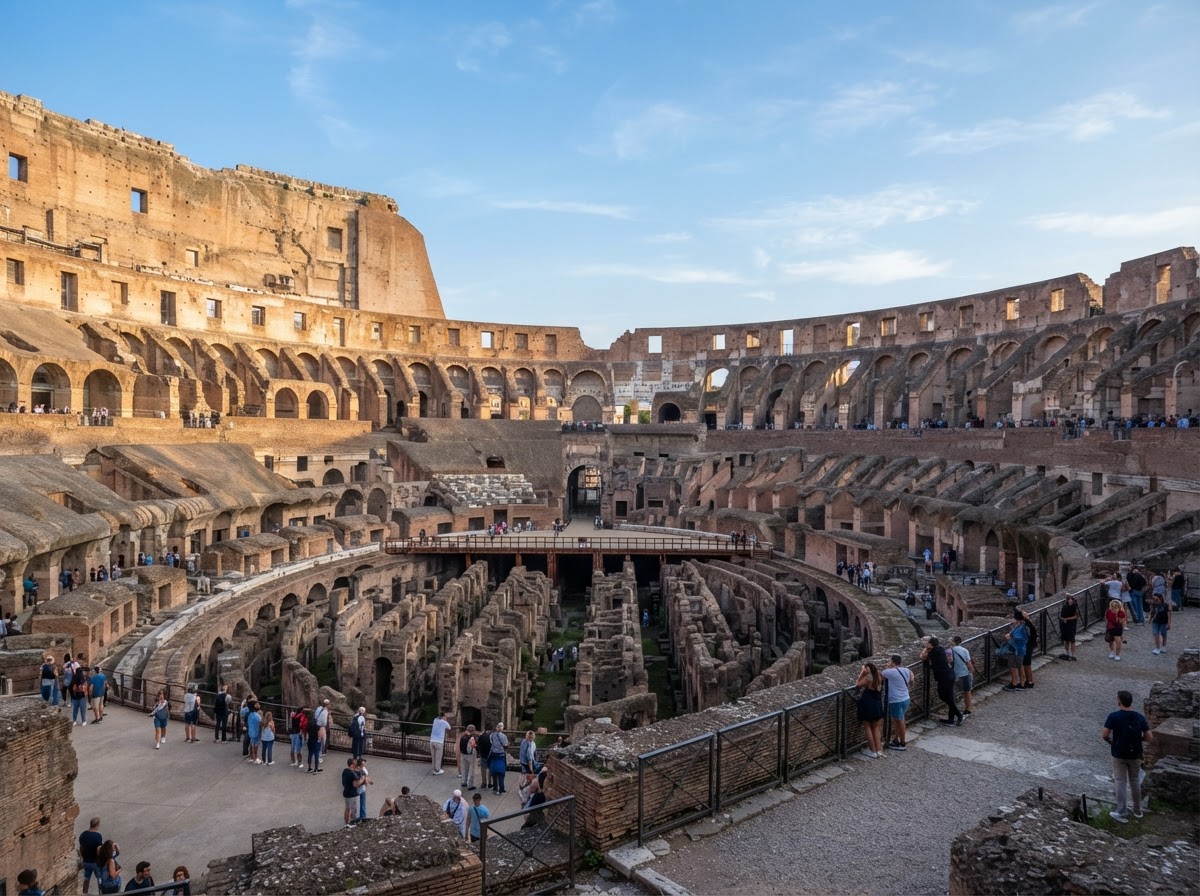
The Colosseum, completed in 80 AD, is the symbol of Rome and the largest amphitheatre ever built. Book a timed entry in advance to skip the long queue, and consider a guided tour that includes the arena floor and the underground. Adjacent is the Roman Forum, the political and commercial heart of ancient Rome — wander among the temples, basilicas and the Senate house. The Palatine Hill, where Rome was founded, overlooks both and offers views and the imperial palaces. A combined ticket covers all three. Just outside, the Pantheon, the best-preserved Roman building, with its extraordinary concrete dome and open oculus, is free to enter and unmissable.
The Vatican
The Vatican is the world's smallest country and the seat of the Catholic Church, and it holds some of the greatest art in the world. The Vatican Museums, including the Sistine Chapel with Michelangelo's ceiling, are vast — book a timed entry in advance and consider an early-access tour to beat the crowds. St Peter's Basilica, the largest church in the world, is free to enter (queue for security) and holds Michelangelo's Pietà and Bernini's baldachin; climb the dome for the view. The Vatican is a half-day minimum, a full day if you are thorough. Dress modestly (covered shoulders and knees) for the basilica. The Castel Sant'Angelo nearby is a fascinating castle-museum with a view back over the Vatican.
The centro storico and the piazzas
The historic centre of Rome is a maze of narrow streets opening into grand piazzas. The Piazza Navona, built over the ancient Stadium of Domitian, is a long oval with Bernini's Fountain of the Four Rivers and beautiful Baroque facades. The Trevi Fountain, Rome's most famous, is best at dawn before the crowds (throw a coin over your shoulder to ensure your return). The Spanish Steps and the Piazza di Spagna are the elegant gathering point. The Piazza del Popolo is a grand entrance piazza. The Pantheon sits in its own piazza. Walking between these is the great pleasure of Rome — get lost in the streets and find a cafe.
Trastevere and the food
Trastevere, across the Tiber, is the old working-class district that is now the heart of Roman food and nightlife. Its narrow cobbled lanes are full of trattorie serving Roman classics: carbonara (egg, pecorino, guanciale, pepper — no cream), cacio e pepe, amatriciana and gricia (the four Roman pastas), saltimbocca, and carciofi alla giudia (Jewish-style artichokes). Eat where the locals eat — a small menu, no English, a queue. The morning markets (Campo de' Fiori) are great for picnic supplies. For pizza, Rome does both the round Neapolitan style and its own thin, crispy rectangular style. Gelato is an art — look for 'produzione propria' (made on site) and natural colours. Coffee is taken standing at the bar, quickly and cheaply.
Where to stay
The centro storico (Pantheon, Piazza Navona, Trevi area) is the most central and convenient but the most expensive. Trastevere is atmospheric and food-focused but can be noisy at night. The area around Termini station is cheaper and well-connected but less charming. The Prati district near the Vatican is elegant and quieter. Monti, between the Colosseum and Termini, is trendy and central. Compare hotel options across booking platforms to find the right balance of location, price and style for your trip, and note that Rome is walkable in the centre but spread out, so a location near a metro line helps.
When to visit Rome
The best times are spring (April to June) and autumn (September to October), when the weather is mild and the city is at its most beautiful. Summer (July-August) is hot (often 35°C+), crowded and humid; many Romans leave in August, so some restaurants close. Winter (November to February) is cool and sometimes wet, but the queues are short, the museums are quiet, and the Christmas season is lovely. Avoid the major Catholic holidays (Easter, Christmas) and the Jubilee periods if you dislike crowds. Whenever you go, Rome is a walking city, so pack comfortable shoes.
Getting to Rome
Rome has two airports: Fiumicino (FCO), the main international hub, and Ciampino (CIA), used by low-cost carriers. Compare flights across providers — Rome is well connected across Europe and the Mediterranean. Fiumicino connects to the city by the Leonardo Express train (32 minutes to Termini); Ciampino by bus. A pre-booked private transfer is the most convenient option if you have luggage or a group; compare transfer providers for fixed-price meet-and-greet services. Taxis are flat-fare to the city. The high-speed train connects Rome to Florence, Milan and Naples.
Getting around Rome
Rome's metro is limited (only three lines, as every dig hits archaeology) but covers the main routes. Buses and trams fill the gaps but can be slow in traffic. Walking is the best way to see the historic centre, which is compact. Taxis are available but can be hard to hail — find a rank or use an app. Ride-hailing apps work. For exploring the wider region or the coast, compare car rental options, but note that driving in the historic centre is restricted (ZTL zones) and parking is difficult — a car is more useful outside the city than in it.
Staying connected with an eSIM
Italy has fast, reliable mobile data, and a travel eSIM is the easiest way to have it from the moment you land. Compare data-only eSIMs across providers, checking data allowances and validity. A single-country Italy plan is usually cheapest; a regional Europe plan is better value if you are combining Rome with other European countries. Remember that most travel eSIMs are data-only, so keep your home line active for SMS verification codes. EU roaming rules may also apply if you have a European SIM.
Muslim-friendly travel in Rome
Italy is not a Muslim-majority country, but Rome has a Muslim community and halal options are available with a little planning. The Great Mosque of Rome, near the Vatican, is the largest mosque in Europe and welcomes visitors. Halal restaurants are found around the Termini area, the Esquilino district and near the mosque — many are run by the Bangladeshi and North African communities. Halal-finder apps are helpful. Pork is common in Roman cuisine, so check dishes carefully. Prayer facilities are limited outside the mosque, so plan prayer times around your hotel. An eSIM helps you locate halal restaurants on the go.
Protecting your trip
Travel insurance is recommended for Italy — medical care is good but can be expensive for non-EU visitors; EU residents may be covered by the EHIC. Compare policies and check what is included. If your flight to or from Rome is delayed, cancelled or overbooked, you are entitled to compensation under EU261 regulations; specialist services can check your eligibility and handle the claim with the airline on your behalf. Keep your boarding pass and booking reference until you are home.
Beyond Rome
Rome is a great base for Italy. Florence is 1.5 hours by fast train; Naples and Pompeii are an hour; the Amalfi Coast is a bit further. The Roman ruins of Ostia Antica are a short train and a great half-day trip. Tivoli's villas (Hadrian's Villa and Villa d'Este) are a day trip. The rest of Italy — Venice, Milan, the lakes, Sicily, Sardinia — is reachable by fast train or short flight. Compare flights, trains, transfers and hotels across providers to build the route that works for your dates and budget.
Recommended Offers
Relevant offers for this trip. You'll be redirected to the partner to complete your booking.
Flights to Rome
Check PriceTours & activities in Rome
View DealsAttraction tickets in Rome
View OfferExperiences & day tours in Italy
View DealsCity passes & multi-attraction tickets
View PassesSelf-guided audio walks in Rome
View OfferRome airport private transfer
Check PriceAirport transfer with English-speaking driver
View AvailabilityCompare airport transfer prices
Check PriceShared & private airport transfers
View OfferItaly eSIM data
View DealUnlimited Italy data eSIM
View DealFlexible global data eSIM
View DealPrepaid Italy data eSIM
View DealLuggage storage in Rome
View DealCar rental comparison in Italy
Check PriceCar rental across Italy
Check PriceCar hire with price-drop protection
Check PriceCar hire with AutoEurope
Check PriceLocal car rental in Italy
Check PriceScooter & motorbike rental
Check PriceFlight delay compensation check
Check EligibilityFlight compensation claim service
Check EligibilitySome links may be affiliate links. JalanDeals may earn a commission when you book through selected partners.
Frequently Asked Questions
How many days do I need in Rome?
Three to four days is a good first trip — enough for the Colosseum, the Vatican, the centro storico and Trastevere. A week lets you add day trips.
When is the best time to visit Rome?
Spring (April-June) and autumn (September-October) are mild and beautiful. Summer is hot and crowded; winter is cool and quieter. Pack comfortable shoes for all the walking.
How do I get from Rome airport to the city?
Fiumicino connects by the Leonardo Express train (32 min to Termini); Ciampino by bus. A pre-booked private transfer is easiest with luggage; taxis are flat-fare.
Is Rome Muslim-friendly?
With planning, yes. The Great Mosque of Rome welcomes visitors, and halal restaurants are found around Termini and Esquilino. Halal-finder apps help; check dishes for pork.
Do I need a visa for Italy?
Italy is in the Schengen Area — many nationalities visit visa-free for up to 90 days; others need a Schengen visa. Check the official Italian immigration guidance for your passport.
Which eSIM works in Italy?
Compare data-only eSIMs from Airalo, Yesim, Drimsim and Saily that cover Italy. A single-country plan is cheapest; a regional Europe plan is better for multi-country trips.
Explore more
Related destination hubs and deal categories for this trip.
Affiliate disclosure: This article contains affiliate links. JalanDeals may earn a commission when you book through selected partners, at no additional cost to you. Prices and availability are set by the provider.