
In this article
- 1. Why Sydney is Australia's great city
- 2. The Opera House and Circular Quay
- 3. The Harbour Bridge and the harbour
- 4. Bondi and the beaches
- 5. The Blue Mountains and day trips
- 6. Where to stay
- 7. When to visit Sydney
- 8. Getting to Sydney
- 9. Getting around Sydney
- 10. Staying connected with an eSIM
- 11. Muslim-friendly travel in Sydney
- 12. Protecting your trip
Sydney is Australia's largest and most famous city, a place where a glittering harbour wraps around an iconic opera house, where surf beaches sit minutes from the central business district, and where a relaxed outdoor lifestyle meets a cosmopolitan food and arts scene. It is a city that lives on and around the water — ferries are public transport, the coastal walk is a daily ritual, and the sunset over the harbour is a civic event. This guide covers what to see, where to stay, when to go, how to get around, how to stay connected and how to compare current offers from multiple travel brands before completing your booking with a partner.
Why Sydney is Australia's great city
Sydney's appeal is its setting. The harbour is one of the most beautiful natural harbours in the world, and the city is built around it, not on top of it. The climate is mild and sunny most of the year, the beaches are world-famous, the food scene draws from across Asia and Europe, and the lifestyle is famously relaxed. It is also a practical base for exploring the rest of New South Wales — the Blue Mountains, the Hunter Valley wine region and the coastal towns to the north and south. Sydney is a city that rewards both the first-time visitor and the repeat traveller.
The Opera House and Circular Quay
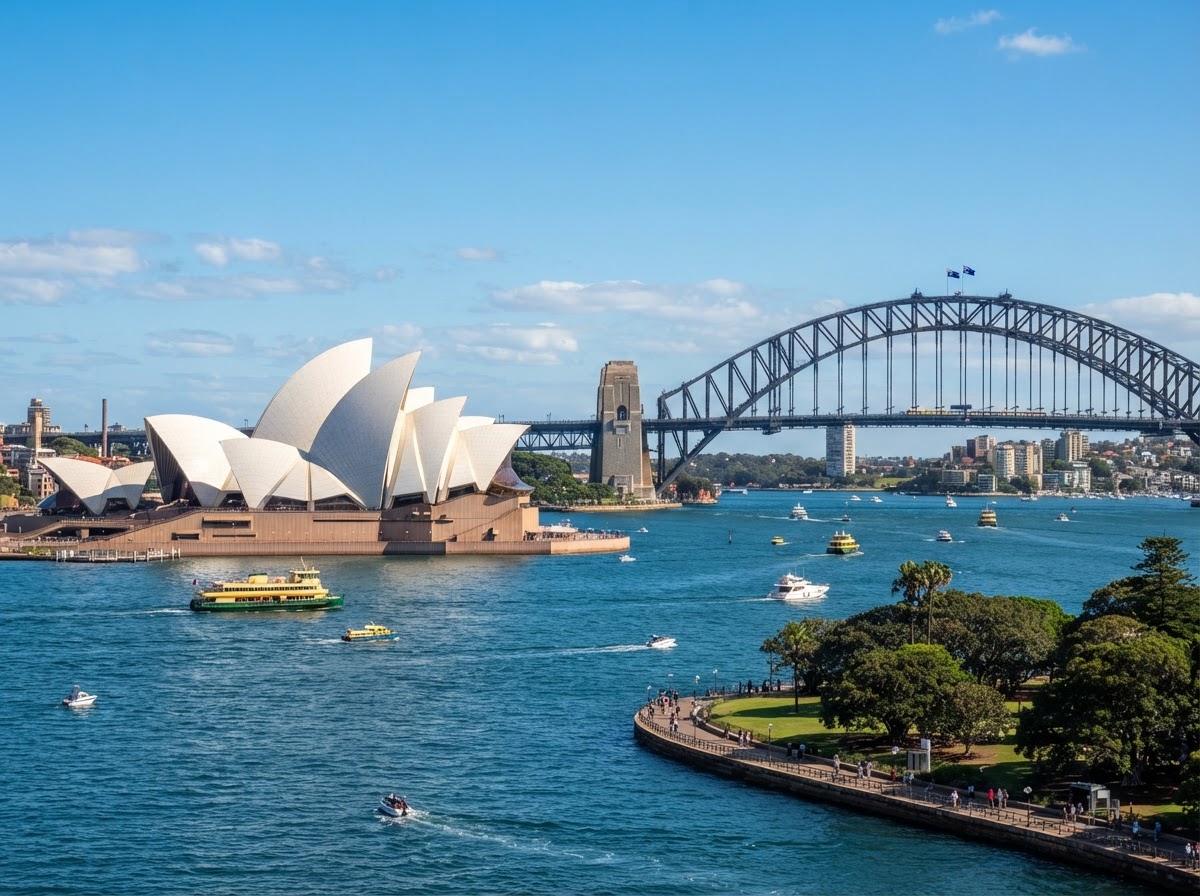
The Sydney Opera House, with its sail-like shells on Bennelong Point, is the symbol of Australia and a UNESCO World Heritage site. You can admire it from the outside, take a guided tour inside, or attend a performance in one of its halls. Circular Quay, beside it, is the transport hub — where the ferries depart and where the Harbour Bridge begins. The Royal Botanic Garden, wrapping around the harbour from the Opera House, is a beautiful walk with views back to the city. The Rocks, the historic quarter beneath the bridge, has the oldest buildings in Australia, weekend markets and good pubs. This area is the heart of Sydney for visitors.
The Harbour Bridge and the harbour
The Sydney Harbour Bridge, the steel arch bridge affectionately called 'the Coathanger', can be climbed — the BridgeClimb takes you to the top of the arch for a panoramic view. Or take the ferry across the harbour, which is the best-value sightseeing in Sydney. The ferry to Manly, across the harbour, is a 30-minute ride that shows off the city from the water. Taronga Zoo, on the north shore, is reached by ferry and has harbour views from the animal enclosures. The harbour itself — with its coves, islands and headlands — is the reason Sydney exists, and it is the reason to visit.
Bondi and the beaches
Bondi Beach is Australia's most famous beach, a golden crescent of sand with a surf culture, a beachfront promenade and the famous Bondi Icebergs ocean pool. The Coogee-to-Bondi coastal walk, along the clifftops past six beaches, is one of the great urban walks and takes about two hours. Manly Beach, on the north side, is reached by ferry and has a more laid-back feel. Bronte, Tamarama and Coogee are the smaller beaches along the coastal walk. The beaches are patrolled, the water is warm in summer, and the surf schools are a popular activity. Sydney's beach culture is central to the city's identity.
The Blue Mountains and day trips
The Blue Mountains, a 90-minute train or drive west of Sydney, are a UNESCO-listed wilderness of eucalyptus forests, sandstone cliffs and waterfalls. The Three Sisters rock formation at Echo Point is the iconic view. The Scenic World cable car and railway descend into the valley. The Jenolan Caves, further west, are among the oldest open caves in the world. Closer to the city, the Hunter Valley wine region is a day trip for tastings, and the Royal National Park, south of the city, has the Figure Eight rock pools and coastal walks. Compare tour options across providers for guided day trips, or use the train network to go independently.
Where to stay
The city centre (CBD) and Circular Quay are the most central, near the Opera House, the harbour and the ferries. The Rocks is historic and atmospheric. Darling Harbour is the entertainment and convention area. Surry Hills and Paddington are the hip, foodie inner suburbs. Bondi Beach is for the beach lifestyle. Manly is for a relaxed, ferry-accessible base. Compare hotel options across booking platforms to find the right balance of location, price and style for your trip, and note that Sydney is spread out, so a location near the CBD or a ferry terminal saves a lot of time.
When to visit Sydney
Sydney has a mild, sunny climate. The best time is the Australian summer (December-February), when it is warm (25-30°C), the beaches are at their best and the city hosts the New Year's Eve harbour fireworks. Spring (September-November) and autumn (March-May) are pleasant and less crowded. Winter (June-August) is mild (15-18°C) and the cheapest time. Avoid the Christmas-New Year period if you dislike crowds and high prices, though the harbour fireworks are spectacular. Whenever you go, Sydney is a year-round destination with plenty of sunshine.
Getting to Sydney
Sydney Kingsford Smith Airport (SYD) is the main airport, about 20 minutes from the city centre by train. Compare flights across providers — Sydney is a major international hub with direct flights across the Pacific, Asia and the Middle East. The Airport Link train is the fastest way to the city. A pre-booked private transfer is the most convenient option if you have luggage or a group; compare transfer providers for fixed-price meet-and-greet services. Taxis and ride-hailing apps are available. Build in time for the journey, which is short.
Getting around Sydney
Sydney's public transport is good — the trains, buses, ferries and light rail are all covered by the Opal card (tap-and-go). The ferries are the most scenic way to get around the harbour. The light rail runs through the city centre to the eastern suburbs. The trains cover the wider metropolitan area. Ride-hailing apps and taxis are available. For the Blue Mountains and the wider region, compare car rental options — driving is on the left, on good roads, and gives you the freedom to explore. The coastal walk and the city centre are very walkable.
Staying connected with an eSIM
Australia has excellent mobile data. A travel eSIM is the easiest way to have it from the moment you land. Compare data-only eSIMs across providers, checking data allowances and validity. A single-country Australia plan is usually cheapest; a regional Asia-Pacific plan is better value if you are combining Australia with neighbouring countries. Remember that most travel eSIMs are data-only, so keep your home line active for SMS verification codes.
Muslim-friendly travel in Sydney
Sydney has a significant Muslim community, particularly in the western suburbs (Lakemba, Auburn, Bankstown), and it is a Muslim-friendly city. Halal food is widely available — the Lebanese and Turkish restaurants of Lakemba and Auburn are famous, and halal-finder apps are helpful. The Lakemba Mosque and the Gallipoli Mosque in Auburn are the main mosques. Prayer facilities are available at the airport and in the main mosques. Sydney is diverse, tolerant and welcoming, and the food scene is one of the most varied in the world. With a little research, Sydney is a comfortable destination for Muslim travellers.
Protecting your trip
Travel insurance is recommended for Australia — medical care is excellent but expensive for visitors not covered by the public system. Compare policies and check what is included, particularly coverage for adventure activities like surfing and hiking. If your flight to or from Sydney is delayed, cancelled or overbooked, you may be entitled to compensation under applicable air passenger rights regulations; specialist services can check your eligibility and handle the claim with the airline on your behalf. Keep your boarding pass and booking reference until you are home.
Recommended Offers
Relevant offers for this trip. You'll be redirected to the partner to complete your booking.
Flights to Sydney
Check PriceTours & activities in Sydney
View DealsAttraction tickets in Sydney
View OfferExperiences & day tours in Australia
View DealsCity passes & multi-attraction tickets
View PassesSelf-guided audio walks in Sydney
View OfferSydney airport private transfer
Check PriceAirport transfer with English-speaking driver
View AvailabilityCompare airport transfer prices
Check PriceShared & private airport transfers
View OfferAustralia eSIM data
View DealUnlimited Australia data eSIM
View DealFlexible global data eSIM
View DealPrepaid Australia data eSIM
View DealLuggage storage in Sydney
View DealCar rental comparison in Australia
Check PriceCar rental across Australia
Check PriceCar hire with price-drop protection
Check PriceCar hire with AutoEurope
Check PriceLocal car rental in Australia
Check PriceScooter & motorbike rental
Check PriceFlight delay compensation check
Check EligibilityFlight compensation claim service
Check EligibilitySome links may be affiliate links. JalanDeals may earn a commission when you book through selected partners.
Frequently Asked Questions
How many days do I need in Sydney?
Four to five days is a good first trip — enough for the Opera House, the harbour, Bondi, the coastal walk and a Blue Mountains day trip. A week lets you add the Hunter Valley.
When is the best time to visit Sydney?
December to February is the warm summer (peak season). Spring and autumn are pleasant and less crowded. Winter (June-August) is mild and the cheapest time.
How do I get from Sydney airport to the city?
The Airport Link train is the fastest way (20 min). A pre-booked private transfer is easiest with luggage; taxis and ride-hailing apps are available.
Is Sydney Muslim-friendly?
Yes. Sydney has a significant Muslim community, halal food is widely available (Lakemba and Auburn are famous for it), and mosques are in the western suburbs. Use halal-finder apps.
Do I need a visa for Australia?
Australia requires a visa or ETA for most nationalities — check the official Australian immigration guidance for your passport before travel.
Which eSIM works in Australia?
Compare data-only eSIMs from Airalo, Yesim, Drimsim and Saily that cover Australia. A regional Asia-Pacific plan is good value if you are visiting neighbouring countries.
Explore more
Related destination hubs and deal categories for this trip.
Deal categories
Affiliate disclosure: This article contains affiliate links. JalanDeals may earn a commission when you book through selected partners, at no additional cost to you. Prices and availability are set by the provider.