
In this article
- 1. Why Oman is the ideal Middle East weekend escape
- 2. The Sultan Qaboos Grand Mosque
- 3. Mutrah Souq and the corniche
- 4. Wadi Shab and the wadi swims
- 5. Wahiba Sands: the desert sunset
- 6. Where to stay
- 7. When to visit Oman
- 8. Getting to and around Oman
- 9. Staying connected with an eSIM
- 10. Muslim-friendly travel in Oman
- 11. Practical tips for your Oman weekend
- 12. Protecting your trip
Oman is the Middle East's quiet counterpoint to its flashier neighbours — a country of incense, frankincense trees, turquoise wadis and empty desert dunes, where the capital Muscat curves along a palm-lined corniche between rugged mountains and the Arabian Sea. For a weekend getaway from anywhere in the Gulf or a short hop from Europe and Asia, Oman delivers a complete Arabian experience in two or three days: a grand mosque, a working souq, a swim in a wadi, a sunset in the desert and a seafood dinner by the harbour. This guide covers what to see, where to stay, when to go, how to get around, how to stay connected and how to compare current offers from multiple travel brands before completing your booking with a partner.
Why Oman is the ideal Middle East weekend escape
Oman is what many travellers imagine the Arabian Peninsula to be before the skyscrapers arrived. The capital, Muscat, is low-rise and whitewashed, framed by the Hajar Mountains and the sea, with no high-rises and a strong sense of place. The country is safe, clean and genuinely welcoming, and the distances are short enough that a two- or three-day trip feels complete rather than rushed. Unlike a beach resort weekend, Oman gives you variety in a single trip: Islamic architecture, a traditional market, a mountain wadi swim, a desert drive and a coastal sunset. It is also one of the most accessible Muslim-friendly destinations in the world — halal food is everywhere, prayer facilities are in every hotel and mall, and the culture is openly and comfortably Islamic. For a weekend, Oman is the real Arabia.
The Sultan Qaboos Grand Mosque
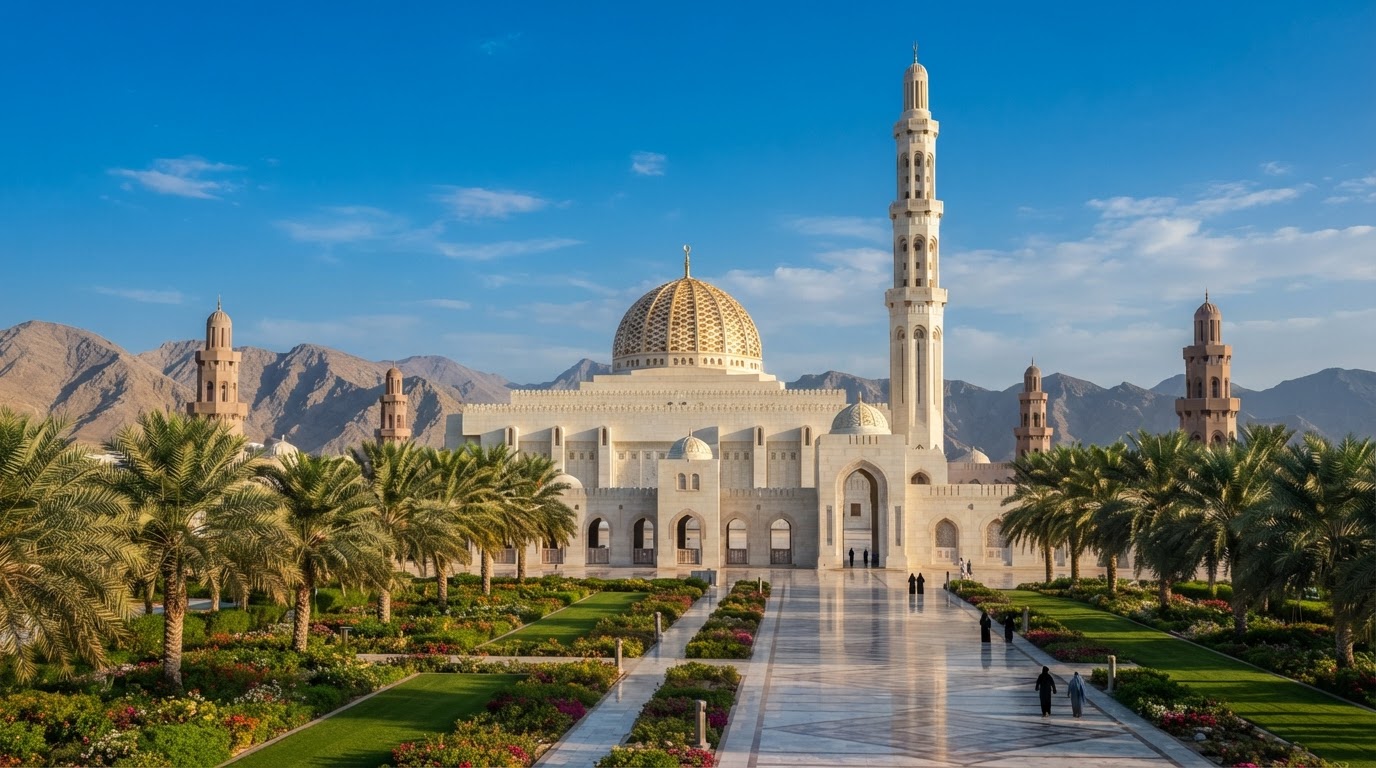
Start with the Sultan Qaboos Grand Mosque, one of the most beautiful modern mosques in the world. The prayer hall holds a hand-woven Persian carpet that was, when installed, the largest single-piece carpet in the world, and a Swarovski chandelier that fills the dome with light. The mosque is open to non-Muslim visitors outside prayer times (usually mornings, Saturday to Thursday), and dress codes are strict — long sleeves, long trousers or a full abaya, and a head covering for women. The white marble, the arches and the gardens are stunning in the morning light. It is the architectural centrepiece of Muscat and the best introduction to Omani design. Arrive early to beat the heat and the tour groups.
Mutrah Souq and the corniche
Mutrah Souq is one of the oldest markets in the Arab world and still a working market, not a tourist reconstruction. Walk the narrow alleys under the wooden roof and you'll find frankincense, myrrh, silver khanjar daggers, Omani hats, pottery, spices and the famous Omani halwa (a dense, sweet dessert served with coffee). The corniche outside, with the whitewashed buildings and the wooden dhows in the harbour, is the classic Muscat postcard. The Al Alam Palace (the ceremonial palace) and the twin Portuguese forts (Jalali and Mirani) that guard the harbour are a short walk along the water. The souq is best in the late afternoon and evening, when it cools down and the lanterns come on. Bargain politely — it is expected and enjoyed.
Wadi Shab and the wadi swims
About 90 minutes from Muscat along the coastal road, Wadi Shab is the classic Omani wadi experience — a hike through a canyon of turquoise pools, ending in a swim through a narrow keyhole into a hidden cave with a waterfall. The hike takes about 45 minutes each way and involves some light scrambling and swimming, so wear water shoes and bring a dry bag for your phone. Wadi Shab is the most popular, but Wadi Tiwi nearby is quieter and equally beautiful. The Bimmah Sinkhole, a dramatic limestone crater filled with turquoise water, is on the same coastal route and makes a good stop. For a weekend, a single wadi day trip is the perfect contrast to a day in the city. The coastal road itself, between mountains and sea, is one of the most scenic drives in Arabia.
Wahiba Sands: the desert sunset
About two hours from Muscat, the Wahiba Sands (also called the Sharqiya Sands) are a stretch of golden dunes that rise to over 100 metres. A desert sunset here is the quintessential Arabian experience — the dunes turn from gold to red to purple as the sun drops, and the silence is total. You can drive in with a 4x4 (deflate the tyres), join a dune-bashing tour, ride a camel at sunset or stay overnight at a desert camp under the stars. A night in the desert is the most memorable part of an Oman weekend for many travellers. Compare desert camp and tour options across providers, and book in advance for weekend stays, as the best camps fill up. Bring layers — the desert gets cold at night, even in summer.
Where to stay
Muscat has a range of stays from luxury beach resorts along the Qurum and Shatti al-Qurum coast to mid-range hotels in the Ruwi and Al Khuwair business districts. For a weekend, a beachfront hotel gives you the sea and the sunset, while a city hotel puts you closer to the souq and the mosque. Many visitors split: one night in the city, one night in the desert. Compare hotel options across booking platforms to find the right balance of location, price and style for your dates, and note that Omani hotels are fully Muslim-friendly — halal kitchens, prayer facilities and no alcohol in many properties. The resorts along the coast are the most popular for a short luxury break.
When to visit Oman
Oman is hot, so timing matters. The best months are October to April, when daytime temperatures are a pleasant 25–30°C and evenings are cool. December to February is peak season — perfect weather but busier and pricier. March, April, October and November are the sweet spots: great weather and fewer crowds. May to September is brutally hot (40°C+), though the southern region of Dhofar, around Salalah, has a unique monsoon (the khareef) from June to September that turns it green and cool — a popular domestic escape. For a weekend from the Gulf, avoid the peak summer unless you plan to stay indoors or head to Salalah. The shoulder seasons are the most comfortable for a short trip.
Getting to and around Oman
Muscat International Airport (MCT) is the main gateway, with direct flights from across the Gulf, Europe and Asia — compare flights across providers to find the best route. A pre-booked private transfer from the airport is the most convenient option, especially with luggage; compare transfer providers for fixed-price options. For the wadis and the desert, a rental car is the most flexible choice — compare car rental options across providers, and note that a 4x4 is recommended for the desert and useful for the wadi roads. Driving in Oman is on the right, roads are good, and an International Driving Permit is widely accepted. Taxis and ride-hailing apps work in Muscat, but for a weekend of wadis and desert, a car is the way.
Staying connected with an eSIM
Oman has good mobile data in Muscat and along the main roads, though coverage in the desert and remote wadis can be patchy. A travel eSIM is the easiest way to have data from the moment you land. Compare data-only eSIMs from providers that cover Oman, checking data allowances and validity. Download offline maps for the wadi and desert areas before you set out. Remember that most travel eSIMs are data-only, so keep your home line active for SMS verification codes. Having reliable data is essential for navigating the wadi hikes and the desert drives, and for locating halal restaurants and prayer times on the go.
Muslim-friendly travel in Oman
Oman is a Muslim-majority country and one of the most naturally Muslim-friendly destinations in the world. Halal food is universal — every restaurant, hotel and cafe serves halal by default. Prayer facilities are everywhere: every hotel has a prayer room or qibla direction, every mall has a prayer area, and the call to prayer is heard across the city. The Grand Mosque is open to visitors and is a highlight for Muslim and non-Muslim travellers alike. Modest dress is expected and appreciated, especially outside the beach resorts. For Muslim travellers, Oman is effortless — no planning for halal food or prayer is needed, and the culture is openly and comfortably Islamic. It is the ideal stress-free weekend for a Muslim traveller.
Practical tips for your Oman weekend
Pack modest, lightweight clothing and a layer for desert nights. Wear sturdy water shoes for the wadi hikes. Carry a refillable water bottle — hydration is essential. Start early to beat the midday heat, especially for outdoor activities. Respect the culture: dress modestly outside resorts, ask before photographing people, and avoid public displays of affection. Friday is the weekly holiday, so some shops and the souq may open later. Omani coffee (kahwa) with dates is the traditional welcome — accept it when offered. A travel eSIM helps you navigate, find prayer times and locate the best restaurants. With a little planning, an Oman weekend is one of the most rewarding short trips in the region.
Protecting your trip
Travel insurance is recommended for Oman — medical care is good but can be expensive, and desert and wadi activities carry some risk. Compare policies and check what is included, particularly medical coverage and evacuation. If your flight to or from Muscat is delayed, cancelled or overbooked, you may be entitled to compensation under applicable air passenger rights regulations; specialist services can check your eligibility and handle the claim with the airline on your behalf. Keep your boarding pass and booking reference until you are home.
Recommended Offers
Relevant offers for this trip. You'll be redirected to the partner to complete your booking.
Flights to Muscat
Check PriceTours & activities in Muscat
View DealsAttraction tickets in Muscat
View OfferExperiences & day tours in Oman
View DealsCity passes & multi-attraction tickets
View PassesSelf-guided audio walks in Muscat
View OfferMuscat airport private transfer
Check PriceAirport transfer with English-speaking driver
View AvailabilityCompare airport transfer prices
Check PriceShared & private airport transfers
View OfferOman eSIM data
View DealUnlimited Oman data eSIM
View DealFlexible global data eSIM
View DealPrepaid Oman data eSIM
View DealLuggage storage in Muscat
View DealCar rental comparison in Oman
Check PriceCar rental across Oman
Check PriceCar hire with price-drop protection
Check PriceCar hire with AutoEurope
Check PriceLocal car rental in Oman
Check PriceScooter & motorbike rental
Check PriceFlight delay compensation check
Check EligibilityFlight compensation claim service
Check EligibilitySome links may be affiliate links. JalanDeals may earn a commission when you book through selected partners.
Frequently Asked Questions
How many days do I need for an Oman weekend?
Two to three days is enough for the Grand Mosque, Mutrah Souq, a wadi trip and a desert sunset. A long weekend lets you add a desert overnight.
When is the best time to visit Oman?
October to April is best, with daytime temperatures of 25–30°C. December to February is peak season. May to September is very hot, except Salalah's monsoon season (June–September).
Is Oman Muslim-friendly?
Yes — Oman is a Muslim-majority country where halal food is universal, prayer facilities are everywhere, and the culture is openly and comfortably Islamic. No special planning is needed.
Do I need a visa for Oman?
Many nationalities can obtain an e-visa or visa on arrival for short stays — check the official Omani immigration guidance for your passport before travel.
Do I need a car in Oman?
For Muscat alone, taxis and ride-hailing work. For the wadis and the desert, a rental car (ideally a 4x4) is strongly recommended for flexibility.
Which eSIM works in Oman?
Compare data-only eSIMs from Airalo, Yesim, Drimsim and Saily that cover Oman. Download offline maps for the desert and wadi areas before you set out.
Explore more
Related destination hubs and deal categories for this trip.
Deal categories
Affiliate disclosure: This article contains affiliate links. JalanDeals may earn a commission when you book through selected partners, at no additional cost to you. Prices and availability are set by the provider.