
In this article
- 1. Why Zanzibar is more than a beach
- 2. Stone Town — the historic heart
- 3. The beaches — north, east and south
- 4. Snorkelling, diving and the reefs
- 5. The spice farms
- 6. Where to stay
- 7. When to visit Zanzibar
- 8. Getting to Zanzibar
- 9. Getting around Zanzibar
- 10. Staying connected with an eSIM
- 11. Muslim-friendly travel in Zanzibar
- 12. Protecting your trip
- 13. Beyond Zanzibar
Zanzibar is the tropical island off the coast of Tanzania that has been a crossroads of the Indian Ocean for a thousand years — a place where Arab, African, Indian and European influences blended into a unique Swahili culture. Its Stone Town is a UNESCO-listed maze of carved doors and coral-stone houses; its beaches are the white-sand, turquoise-water ideal; its spice farms gave the world cloves; and its reefs offer some of the best diving and snorkelling in East Africa. It is the perfect beach finale to a Tanzania safari, or a destination in its own right. This guide covers what to see, where to stay, when to go, how to get around, how to stay connected and how to compare current offers from multiple travel brands before completing your booking with a partner.
Why Zanzibar is more than a beach
Zanzibar is often sold as a beach destination, and its beaches are genuinely world-class, but it is the culture that makes it special. This was the capital of the Omani sultanate, the centre of the East African spice trade, and a cosmopolitan port where dhows from Arabia, India and Africa met. The result is a Swahili culture that is unique — the language, the food, the architecture, the music all reflect the blend. Stone Town is one of the most atmospheric old cities on the continent. Add the beaches, the reefs and the spice farms, and Zanzibar is one of the most rewarding tropical destinations in the world.
Stone Town — the historic heart
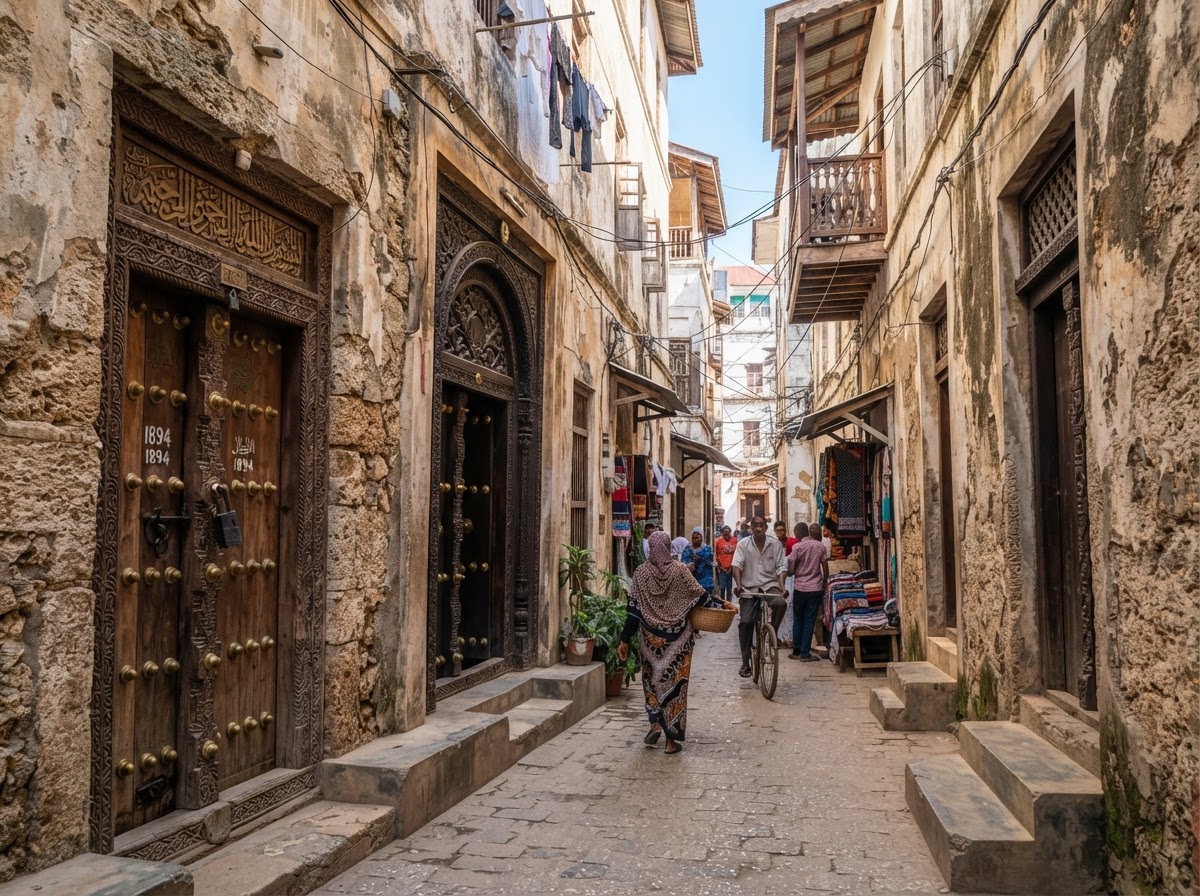
Stone Town is the historic core of Zanzibar City and a UNESCO World Heritage site. It is a maze of narrow lanes, coral-stone houses and the famous carved Zanzibar doors (each with a different pattern, some with Indian and some with Arabic influences). The highlights include the House of Wonders (the former sultan's palace), the Old Fort, the Anglican Cathedral (built on the site of the former slave market, with a moving memorial), the Hamamni Persian Baths and the lively Darajani market. The best way to see it is to wander — get lost in the lanes, find the doors, and end the day at the Forodhani Gardens night market, where vendors cook Zanzibar pizza, grilled octopus and sugar-cane juice as the sun sets over the harbour.
The beaches — north, east and south
Zanzibar's beaches are the headline for most visitors, and each coast has a different character. The north coast (Nungwi and Kendwa) has the best swimming at all tides and a lively atmosphere — this is where the beach bars and the sunset parties are. The east coast (Paje, Jambiani, Bwejuu) has a tidal lagoon — at low tide the water recedes for hundreds of metres, revealing seaweed farms and allowing walks to the reef, and at high tide it is perfect for swimming and kite-surfing (Paje is the kite-surfing capital). The south-east (Michamvi) has a beautiful sunset-facing beach. The north-east (Matemwe) is quieter and closer to the Mnemba Atoll dive site. Choose your beach by what you want — lively or quiet, all-tide swimming or tidal lagoon.
Snorkelling, diving and the reefs
Zanzibar has some of the best snorkelling and diving in East Africa. The Mnemba Atoll, off the north-east coast, is the premier site — a protected marine area with coral gardens, reef fish, dolphins and (in season) whale sharks. The boat trips from Matemwe or Nungwi are the way to reach it. The reef at Pongwe and the lagoon at Jambiani are good for snorkelling from the beach. Kite-surfing is huge at Paje, with schools and consistent wind. Dhow sunset cruises, with or without snorkelling, are a wonderful way to end the day. Book through a reputable operator — compare tour options across providers — and check what is included. The reefs are fragile, so use reef-safe sunscreen and don't touch the coral.
The spice farms
Zanzibar was once the world's largest producer of cloves, and the spice farms are a key part of its history and a popular half-day tour. A guided walk through a farm shows how cloves, nutmeg, cinnamon, cardamom, vanilla, pepper and turmeric grow, with the chance to taste and smell each one. The tours usually include a lunch of spiced dishes and a chance to buy fresh spices. It is a fascinating insight into the agriculture that shaped the island's history. Book through a reputable operator — compare tour options across providers. The farms are inland, so combine the tour with a visit to the Jozani Forest, the last remaining indigenous forest, home to the rare red colobus monkey.
Where to stay
Stone Town has atmospheric boutique hotels in restored merchant houses — stay here for the culture and the history, and for the first and last nights. The beaches have the full range, from backpacker hostels to luxury resorts — Nungwi and Kendwa for lively all-tide swimming, Paje for kite-surfing, Jambiani and Pongwe for quiet, Matemwe for diving. Many visitors split their stay — a night or two in Stone Town, then the rest on the beach. Compare hotel options across booking platforms to find the right balance of location, price and style for your trip, and note that the east coast's tidal lagoon means swimming is tide-dependent.
When to visit Zanzibar
Zanzibar is tropical and warm year-round (around 28-32°C). The best times are the dry seasons: the long dry season from June to October (the coolest, driest time and the best for the beach), and the short dry season from January to February. The long rains fall from March to May (heavy, daily downpours — many hotels close), and the short rains from November to December (lighter, shorter). Avoid the long rains if you can. The beaches are at their best from June to October and from December to February. Ramadan (dates vary) affects daytime dining, though tourist hotels continue to serve. Whenever you go, the water is warm and the sun is strong.
Getting to Zanzibar
Abeid Amani Karume International Airport (ZNZ) in Zanzibar City has direct flights from across East Africa, the Middle East and Europe (especially in the charter season). Many visitors arrive via Julius Nyerere International Airport (DAR) in Dar es Salaam, Tanzania, then take a short connecting flight or a ferry to Zanzibar. Compare flights across providers. A pre-booked private transfer is the most convenient option from the airport to your beach hotel; compare transfer providers for fixed-price options. Taxis are available but agree the fare in advance. The ferry from Dar es Salaam takes about 2 hours. Build in time for the transfer to your beach.
Getting around Zanzibar
Zanzibar is a small island, but the roads are rough and the journeys slow. Stone Town is walked. For the beaches, a private transfer or a taxi is the way to go — agree the fare in advance. Daladalas (shared minibuses) are cheap and cover the island but require local knowledge. Car and scooter rental is possible — compare car rental options — but the roads are rough and the driving style requires confidence; scooters are popular in the beach areas. For day trips (spice farms, Jozani Forest, the north coast), a private driver or a booked tour is the simplest option. Build in buffer time — a 40km trip can take an hour and a half.
Staying connected with an eSIM
Tanzania's mobile data is decent in the towns and on the east coast, but coverage can be patchy in the interior and on some beaches. A travel eSIM is the easiest way to have data from the moment you land. Compare data-only eSIMs across providers, checking coverage in the areas you plan to visit, data allowances and validity. A single-country Tanzania plan is usually cheapest; a regional East Africa plan is better value if you are combining Zanzibar with a safari in Tanzania or Kenya. Download offline maps for the island. Remember that most travel eSIMs are data-only, so keep your home line active for SMS verification codes.
Muslim-friendly travel in Zanzibar
Zanzibar is one of the most Muslim-friendly destinations in Africa. The population is overwhelmingly Muslim (around 99%), halal food is the norm across the island, and mosques are in every village (the call to prayer is part of the soundscape). Prayer facilities are available everywhere. During Ramadan, the island adapts: daytime eating in public is limited, but tourist hotels continue to serve, and the iftar meal after sunset is a wonderful communal experience. Dress modestly outside the beach resorts — Zanzibar is conservative, so cover shoulders and knees in Stone Town and villages. Alcohol is available in the tourist hotels and beach bars but is not part of the local culture. Zanzibar is safe, family-friendly and famously hospitable.
Protecting your trip
Travel insurance is recommended for Tanzania — medical care is limited outside the main towns, and serious cases may require evacuation to Dar es Salaam or Nairobi. Compare policies and check what is included, particularly coverage for diving and any safari activities. If your flight to or from Zanzibar is delayed, cancelled or overbooked, you may be entitled to compensation under applicable air passenger rights regulations; specialist services can check your eligibility and handle the claim with the airline on your behalf. Keep your boarding pass and booking reference until you are home. Take malaria prophylaxis — Zanzibar has a low but present risk.
Beyond Zanzibar
Zanzibar is the perfect beach finale to a Tanzania safari. The Serengeti, the Ngorongoro Crater, Tarangire and Lake Manyara are the classic northern circuit, reached by a flight from Zanzibar or Dar es Salaam to the safari airstrips. Mount Kilimanjaro is for the adventurous trekker. The mainland coast (Dar es Salaam, the Swahili coast) and the other islands (Pemba, Mafia Island for whale sharks) offer more beach and diving. Kenya, with the Maasai Mara, is a short flight north. Compare flights, transfers, tours and hotels across providers to build the route that works for your dates and budget.
Recommended Offers
Relevant offers for this trip. You'll be redirected to the partner to complete your booking.
Flights to Zanzibar
Check PriceTours & activities in Zanzibar
View DealsAttraction tickets in Zanzibar
View OfferExperiences & day tours in Tanzania
View DealsCity passes & multi-attraction tickets
View PassesSelf-guided audio walks in Zanzibar
View OfferZanzibar airport private transfer
Check PriceAirport transfer with English-speaking driver
View AvailabilityCompare airport transfer prices
Check PriceShared & private airport transfers
View OfferTanzania eSIM data
View DealUnlimited Tanzania data eSIM
View DealFlexible global data eSIM
View DealPrepaid Tanzania data eSIM
View DealLuggage storage in Zanzibar
View DealCar rental comparison in Tanzania
Check PriceCar rental across Tanzania
Check PriceCar hire with price-drop protection
Check PriceCar hire with AutoEurope
Check PriceLocal car rental in Tanzania
Check PriceScooter & motorbike rental
Check PriceFlight delay compensation check
Check EligibilityFlight compensation claim service
Check EligibilitySome links may be affiliate links. JalanDeals may earn a commission when you book through selected partners.
Frequently Asked Questions
How many days do I need in Zanzibar?
Five to seven days is ideal — a night or two in Stone Town, then the rest on a beach. Add a safari on the mainland for the full Tanzania experience.
When is the best time to visit Zanzibar?
June to October is the cool, dry peak season. December to February is the short dry season. Avoid the long rains (March-May). The water is warm year-round.
How do I get to Zanzibar?
Fly into Zanzibar airport (ZNZ) direct, or via Dar es Salaam (DAR) then a connecting flight or a 2-hour ferry. A pre-booked private transfer is easiest to your beach hotel.
Is Zanzibar Muslim-friendly?
Very. The population is around 99% Muslim, halal food is the norm, mosques are in every village, and prayer facilities are everywhere. Dress modestly outside the beach resorts.
Do I need a visa for Tanzania?
Tanzania requires a visa or an e-visa for most nationalities — check the official Tanzanian immigration guidance for your passport before travel.
Which eSIM works in Tanzania?
Compare data-only eSIMs from Airalo, Yesim, Drimsim and Saily that cover Tanzania. Coverage in the interior and on some beaches can be patchy, so download offline maps.
Explore more
Related destination hubs and deal categories for this trip.
Deal categories
Affiliate disclosure: This article contains affiliate links. JalanDeals may earn a commission when you book through selected partners, at no additional cost to you. Prices and availability are set by the provider.